

Finding influencer marketing software that actually fits campaign workflow and budget priorities is harder than expected today. Many alternatives charge unpredictable fees, gate automation behind expensive plans, or lock pricing and discovery features to custom sales tiers. This comparison lets brands, agencies, and marketing teams pick the influencer marketing platform that matches their campaign scale, budget, and automation needs without buyer regret.
Table of Contents
ContentGenZ
At a Glance
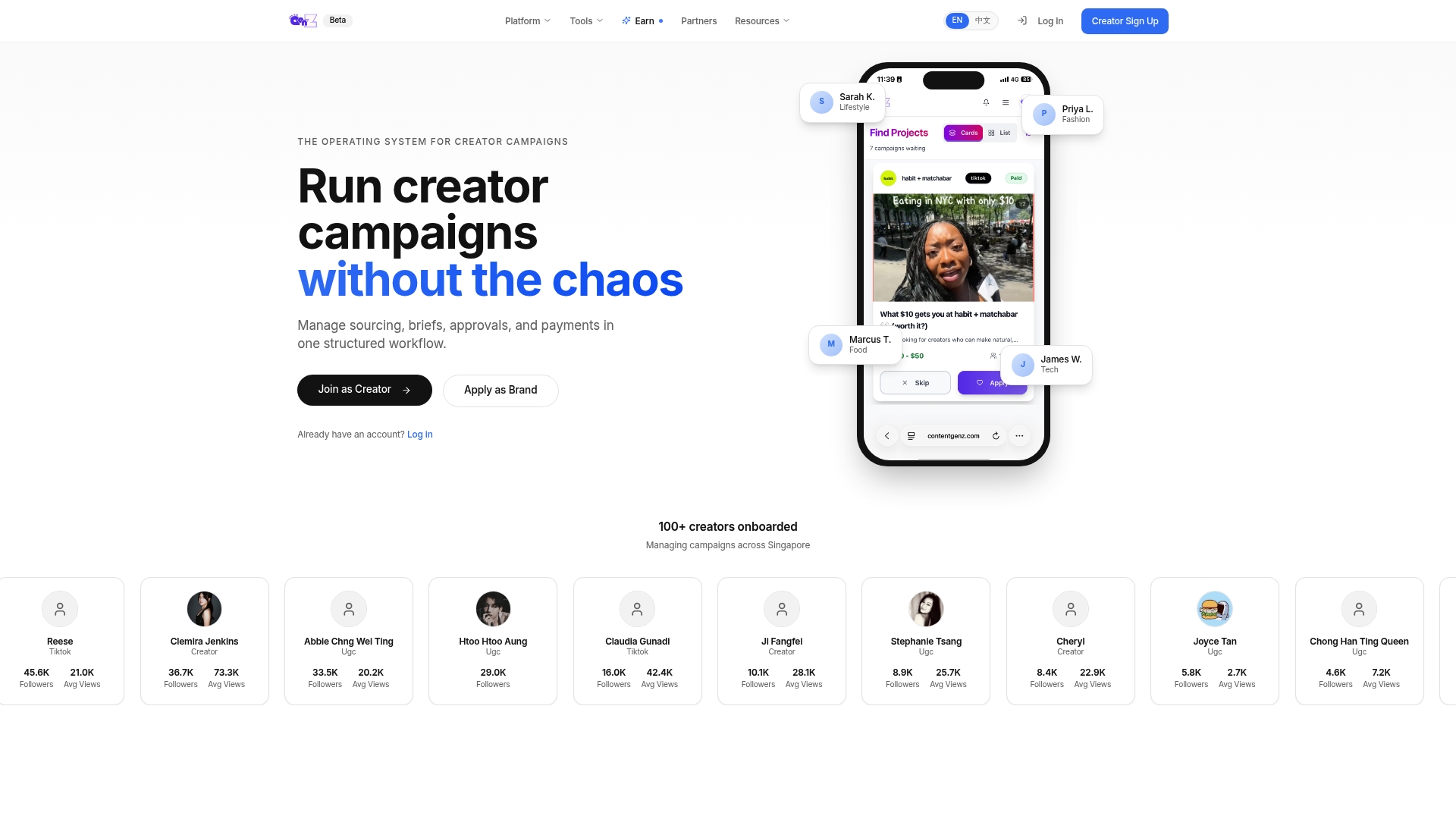
ContentGenZ's marketing materials state it charges a flat monthly fee and does not take transaction or platform fees. That fee model pairs with full campaign automation from brief to payment. The product is in private beta and limits creator discovery while the database is built.
Core Features
ContentGenZ automates campaign workflows from brief to payment and includes automated legal contract generation. It centralizes communication with creators and processes payments directly via Stripe. The subscription plan allows unlimited creator applications inside each plan.
Key Differentiator
That fee model bundles full campaign automation and removes per-transaction or platform charges. The approach shifts cost predictability from per-influencer fees to a single monthly outlay. Agencies and brands that run recurring campaigns will see the difference in forecasting.
Pros
No platform or transaction fees make monthly budgeting predictable and remove per-campaign surprises. Built-in contract generation and direct Stripe payments let you close creator agreements and pay them from one workflow. Unlimited creator applications and centralized communication support rehiring and ongoing creator relationships.
Cons
- Creator discovery is limited while the platform remains in private beta and its creator database is under development.
Who It's For
Small to medium brands, marketing agencies, and creators that run recurring influencer campaigns and want a single tool to manage briefs, approvals, and payments. Teams that value predictable monthly costs over per-transaction billing will benefit most. Ideal for groups planning long-term creator relationships rather than one-off discovery hunts.
Unique Value Proposition
According to the company, creators receive 100% of their earnings while brands pay a flat monthly fee with no platform commissions. That arrangement removes commission friction for creators and keeps your media budget focused on fees you control. For brands, predictable monthly pricing reduces finance overhead and simplifies campaign forecasting.
Real World Use Case
A DTC brand running monthly product launches posts briefs in the platform. The marketing team reviews unlimited creator applications, issues automated contracts, collects deliverables, and pays creators through Stripe. The team reports saving several hours each week compared with manual methods.
Pricing
Starting at $99USD per month for solopreneur and brand plans. Agency plans start at $149USD per month per brand with a minimum two brand commitment. Most plans include a 14 day free trial.
Website: https://contentgenz.com
Influencity
At a Glance
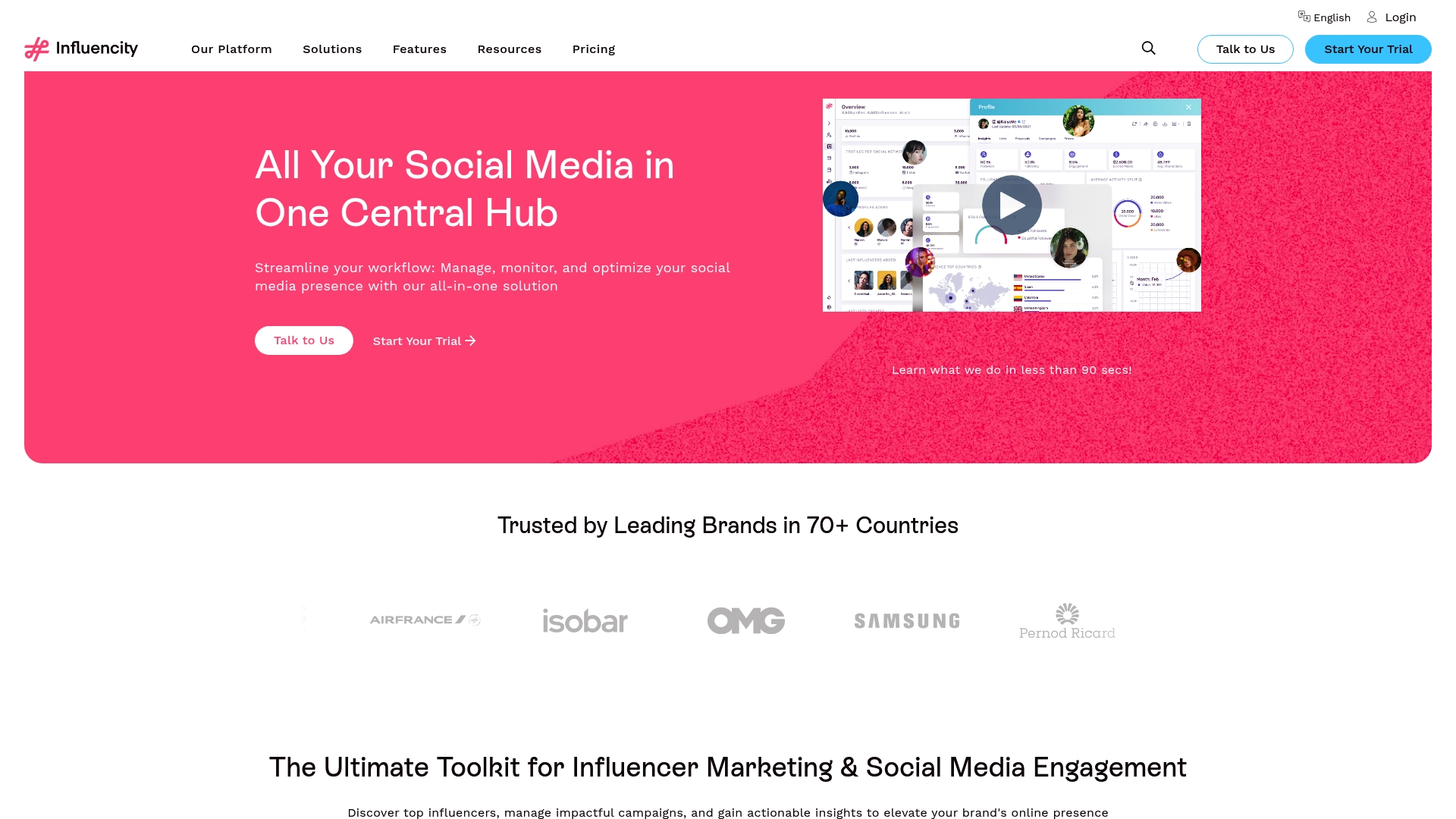
The vendor advertises tracking of over 200 million creators across TikTok, Instagram, YouTube, and Twitch. Influencity also reports usage by brands across 70+ countries, which explains its global feature set. The platform groups discovery, outreach, campaign tracking, and social listening in one place for teams running many influencer relationships.
Core Features
Influencity centers on influencer discovery and comparison with filters for audience demographics, credibility signals, and performance metrics. It bundles relationship management, campaign planning and tracking, content analysis, and social listening into a shared workspace while offering bulk outreach and content calendar tools. Reporting and campaign measurement sit alongside inbox and scheduling features for cross channel management.
Key Differentiator
The one feature that sets Influencity apart is the single interface for discovery, relationship management, execution, and monitoring. That design reduces tool switching for teams that both recruit creators and run paid or organic campaigns across multiple networks.
Pros
Support is fast and helpful and the onboarding experience speeds up initial setup. The interface is intuitive, which shortens the learning curve for account managers and marketers. Discovery and audience analysis tools are detailed, letting you segment lists and vet creator audiences before outreach. Campaign management features cover brief creation, deliverable tracking, and reporting, and social listening helps detect sentiment and competitor activity.
Cons
- Higher price makes it hard for small teams or early stage brands to justify the monthly cost.
- Influencer suggestion accuracy can vary across niches and regions, so manual vetting is often required.
- User generated content management and creator collaboration tools lack some advanced controls for complex campaigns.
- Reporting lacks a few granular analytics options power users may expect.
When It May Not Fit
If your team runs small campaigns with a limited budget, the Professional plan may feel expensive. If you need deep user generated content rights tracking or advanced collaboration features, the platform may require supplementing tools. If you demand highly customized analytics dashboards out of the box, reporting will likely fall short.
Who It's For
Large brands and marketing agencies running multiple influencer programs across channels will get the most value. Teams that need a single hub for discovery, outreach, content scheduling, and sentiment monitoring benefit from the combined feature set. This fits organizations with dedicated influencer managers and budget for higher tier plans.
Real World Use Case
A global consumer brand uses Influencity to locate TikTok creators, run coordinated outreach sequences, track published deliverables, and measure campaign ROI. The team also monitors brand sentiment and competitor activity to adjust creative briefs between campaign phases.
Pricing
The Professional plan starts at $318/month or $3,816 annually. Enterprise pricing and custom packages are available on contact for larger teams and custom data needs.
Website: https://influencity.com
Aspire
At a Glance
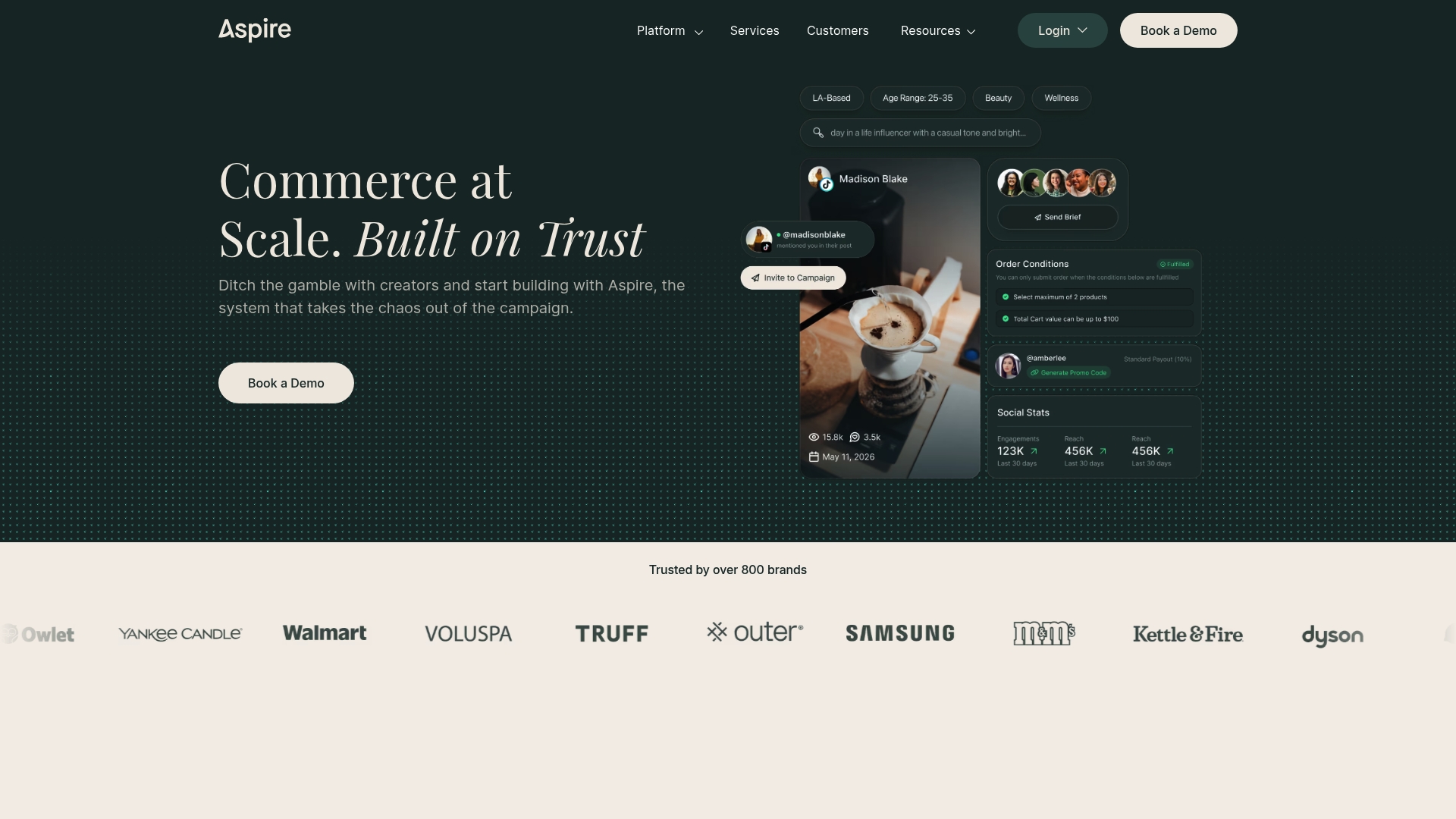
Aspire pairs AI powered creator discovery with end to end campaign execution through its agency services. The product supports ambassador programs, UGC, affiliate marketing, and social commerce while managing payments and content assets. Brands running multi-channel creator programs will find the platform centralizes discovery, incentives, and performance tracking.
Core Features
A marketplace and AI powered search help you find and vet creators, while a contact hub keeps outreach and agreements in one place. Campaign tools cover content approval, workflow automations, gifting and seeding, and affiliate link generation, with an integrated content hub for asset management. Impact dashboards report reach, engagement, and conversions, and the platform includes ad campaign features and a Shopify integration for store and creator program management.
Key Differentiator
The main distinction is AI powered creator discovery paired with campaign management and performance analytics. That combination lets teams move from sourcing to payouts without switching tools. Aspire also offers agency services to run campaigns if your team needs operational support.
Pros
The dashboard groups partnerships, content, and payments in a single workspace, which cuts down on context switching and tracking across spreadsheets. Automation handles rewards, approvals, and basic workflows so you spend less time on manual tasks. Customer support and the option to use Aspire's agency services add practical help for teams that need extra operational bandwidth.
Cons
- Some users report poor influencer quality and the presence of fake accounts. This raises the burden on vetting and manual checks.
- Enforcing contract terms with creators can be difficult, which creates legal and delivery risk for long campaigns.
- Search can require very specific inputs, making discovery slower when briefs are broad or experimental.
- Pricing details are not publicly listed, which suggests custom or tiered plans and may slow procurement.
When It May Not Fit
If you need strict contract enforcement tools built into the platform, Aspire may not meet that requirement. Teams that prefer open, trialable pricing or month to month plans may find Aspire's sales process geared toward longer agreements. Organizations that require highly curated creator verification will need added manual vetting because of reported quality issues.
Notable Integrations
Aspire lists Shopify as a direct integration for managing store linked programs and creator-driven commerce. The Shopify connection supports affiliate links and store related workflows. No other third party integrations are listed publicly.
Who It's For
Marketing teams and brands running influencer and creator marketing programs will get the most value from Aspire. Agencies that manage creator campaigns for clients can use the platform plus agency services to scale delivery. Teams that want discovery, campaign operations, and analytics inside the same product will find the feature set aligned with that need.
Real World Use Case
A consumer brand uses Aspire to recruit hundreds of micro creators, automate payout and content review, and monitor engagement in real time. The team routes deliverables through the content hub and issues rewards via the platform's payout tools. Analytics then guide which creator relationships continue into an ambassador program.
Pricing
Pricing is not published openly, and Aspire appears to offer customized plans or enterprise tiers. Expect to engage sales for a quote and contract terms. The lack of listed pricing may mean longer procurement cycles for smaller brands.
Website: https://aspire.io
Influencer Hero
At a Glance
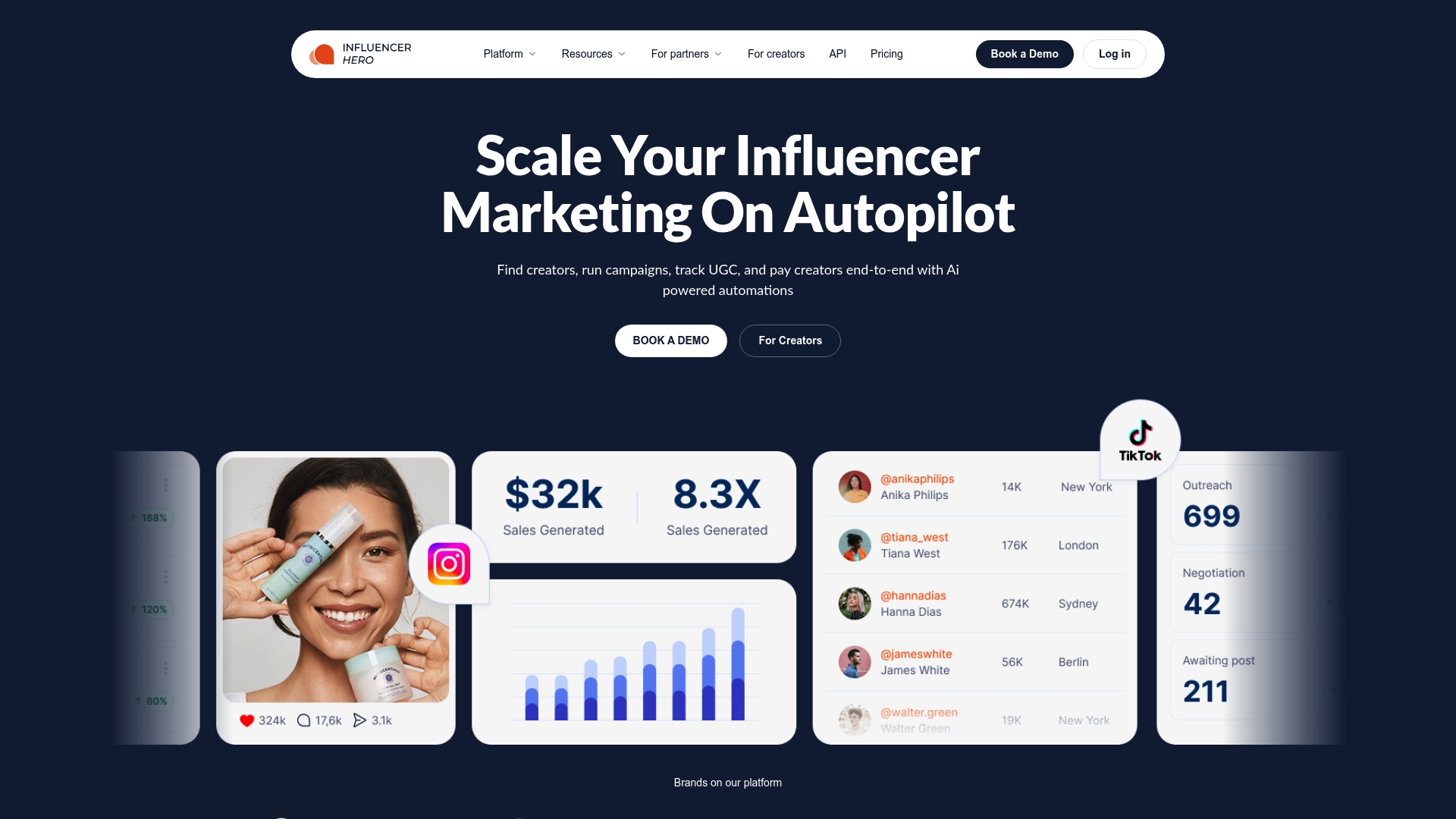
Plans start at $519/month for standard packages. As one of the modash alternatives, Influencer Hero pairs influencer search with automated outreach and payment tools. That pricing and the heavy automation target teams running high volume influencer programs.
Core Features
The platform uses AI filters for influencer discovery, plus automated email outreach and a campaign CRM to manage creators across projects. A content and UGC library tracks assets and performance while gifting workflows and batch payouts handle fulfillment and international payments. Performance analytics connect campaign metrics to payouts and feed into integrations with commerce and marketing tools.
Key Differentiator
The product differentiator is the emphasis on end to end automation combined with a broad influencer database and deep third party integrations. That setup reduces the number of systems you must stitch together to run a campaign. Teams that need discovery, outreach, fulfillment, and payments inside one system will find that focus attractive.
Pros
Automated outreach cuts the manual work of discovery and follow up for large influencer lists. Analytics and reporting deliver clear campaign performance views, and the interface supports managing many creators across concurrent campaigns. The platform also includes educational resources and responsive support to help teams adopt complex workflows.
Cons
- Search and filter functionality can be limiting or buggy, which slows targeted discovery.
- Pricing models are expensive for agencies managing multiple brands and for smaller teams.
- Complex automation features create a steep learning curve for teams without dedicated setup resources.
- The influencer database is sizable but could be larger for deeper discovery in niche markets.
When It May Not Fit
Not ideal for small brands on a tight budget that need a low cost entry point. Skip this platform if you want a light tool that focuses only on simple outreach rather than full campaign operations. Also avoid it when your campaigns rely mostly on niche local creators who may not appear in the database.
Notable Integrations
- Shopify
- Klaviyo
- Slack
- Zapier
- Google Sheets
- Mailchimp
- Stripe
- Wix
Who It's For
Marketing teams, agencies, and brands running extensive influencer programs will get the most value from Influencer Hero. The product fits teams that need automation across discovery, outreach, and payments. It also suits groups that want campaign data consolidated with commerce and email systems.
Real World Use Case
A fashion brand uses Influencer Hero to discover and outreach to hundreds of influencers across regions. The team automates product gifting, tracks content in the UGC library, and pays creators with batch payouts. Reporting ties engagement and conversions back to spend to show campaign ROI.
Pricing
Plans start at $519/month for standard packages with higher tiers and custom enterprise quotes available. Subscriptions can be billed monthly, quarterly, or annually, with discounts for longer commitments. Additional fees may apply for premium features or very large influencer databases.
Website: https://influencer-hero.com
Buzzbassador
At a Glance
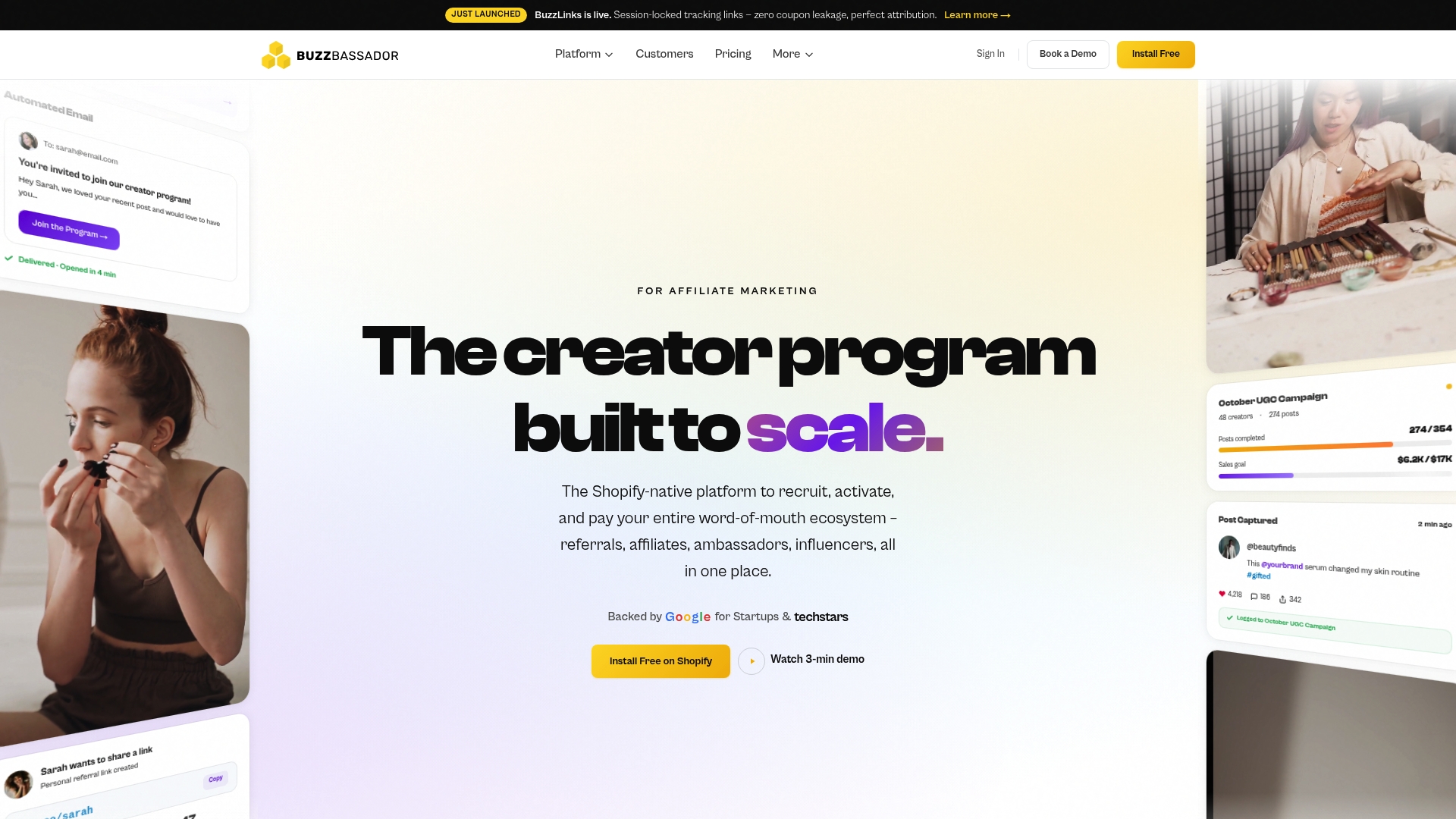
Buzzbassador uses session locked tracking links called BuzzLinks to prevent coupon leaks and protect attribution. The platform is native to Shopify, so program setup and order tracking live inside the store admin. Plans start with a free tier and extend to named paid tiers and enterprise quotes.
Core Features
Buzzbassador ties ambassador, affiliate, and influencer workflows directly to Shopify and automates creator recruitment, onboarding, campaign setup, and payouts. It includes social listening across Instagram, TikTok, and Facebook, plus campaign goal tracking and storeside payout options such as PayPal, ACH, and store credit. Unique tracking links and mission based campaign controls aim to reduce promo code leakage and improve sales attribution.
Key Differentiator
The product focuses on Shopify first and integrates payouts, attribution, and recruitment inside the merchant storefront. That architecture makes order level tracking and commission attribution more direct than tools that sit outside the store. The session locked BuzzLinks are the stated mechanism that separates attribution here from standard coupon code tracking.
Pros
The interface keeps program management and creator-facing tasks in one place, which reduces context switching for store teams. Automated payouts and multiple payout methods cut manual finance work and speed payments to creators. Social listening and recruitment tools help you find organic brand advocates and convert them into program members without heavy manual outreach. The platform includes configurable campaign missions that let you reward specific actions and measure goal progress.
Cons
- Customer support quality has been reported as poor or slow by some users after payments, which can delay issue resolution.
- Some users report platform bugs and performance issues that interfere with campaign workflows.
- Reward levels may not always match the work required for certain missions, making ROI calculations harder.
- Exiting long term subscriptions may be difficult for some brands, according to feedback.
When It May Not Fit
If your store does not use Shopify, this product will not integrate as deeply with your commerce stack. Brands that require white glove support or fast engineering responses may find the reported support issues problematic. Teams that need highly granular reward structures for complex creator deals should test reward flows before signing a longer contract.
Notable Integrations
Buzzbassador lists direct integrations with Shopify and Klaviyo, covering commerce data sync and email automation. Those integrations support order level attribution and allow you to activate audience or revenue based triggers for campaigns.
Who It's For
Ecommerce brands and marketing teams running Shopify stores that need a centralized way to manage ambassadors, affiliates, and influencers. It suits teams that want automated payouts and built in campaign tracking without building custom middleware. Startups and larger merchants can both find relevant tiers, though enterprise buyers may require a custom quote.
Real World Use Case
A Shopify apparel brand recruited hundreds of micro influencers, automated onboarding and payouts, and used BuzzLinks to stop coupon sharing across social channels. The brand tracked campaign goals in real time and reduced manual reconciliation work for accounting. The result was cleaner attribution and fewer disputed commissions.
Pricing
Plans begin with a free tier. Paid plans start at $169 per month for Build, and $549 per month for Plus. Enterprise level pricing is available by custom quote.
Website: https://buzzbassador.com
Comparison of alternatives
Selecting the most suitable platform for influencer marketing campaigns involves assessing unique feature sets, pricing models, and operational support to align with specific business needs.
Pricing structure considerations
ContentGenZ distinguishes itself with its flat monthly fee structure, eliminating per-transaction and platform fees. This approach suits teams requiring predictable budgeting, as it simplifies financial forecasting compared to competitors like Influencity, which offers a tiered pricing model beginning at $318 per month but with more extensive discovery features. ContentGenZ's pricing model is for recurring campaigns with steady creator collaboration demands, whereas other platforms may suit larger campaigns with less frequent occurrences due to cost structures.
Creator network accessibility
Influencity excels in the breadth of its creator network, touting over 200 million indexed creators globally. This extensive database makes it ideal for larger campaigns with diverse target audiences, compared to ContentGenZ, which remains in private beta and offers limited creator discovery capabilities as their database continues to grow. While ContentGenZ focuses on long-term creator relationships, competitors like Influencity and Aspire cater to brand requirements for immediate and broad creator recruitment through their AI-powered and advanced discovery tools, respectively.
Best fit
- Teams managing recurring campaigns and prioritizing predictable financial outlays will benefit from ContentGenZ's flat monthly fee model and no platform commission charges.
- Brands requiring extensive access to a larger selection of creators across multiple platforms should consider Influencity for its global network and demographic filtering options.
- Marketing teams wanting complete operational automation paired with integration into widespread third-party tools may find Influencer Hero more aligned with their needs.
Our pick
As the best fit for agencies and brands needing cost-effective influencer campaign management with centralization and predictable flat pricing, ContentGenZ stands out for its streamlined approach to maintaining recurring marketing strategies. However, for clients needing an immediate and expansive creator network, alternatives like Influencity or Aspire might present a better suited solution. In essence, ContentGenZ caters exceptionally to cost-focused, repeat campaign-oriented teams while competitors excel in features like extensive discovery and multi-channel integration.
For teams valuing cost predictability and streamlined influencer campaign workflows, this comparison outlines the features and limitations of various platforms.
| Platform | Core Feature | Key Differentiator | Pricing | Notable Limitation |
|---|---|---|---|---|
| Contentgenz | Campaign automation from brief to payment | Flat monthly fee without transaction charges | Starting at $99/month | Limited creator discovery in private beta |
| Influencity | Influencer discovery and campaign management | Unified interface for cross-network campaigns | Starting at $318/month | High cost for small teams or brands |
| Aspire | AI-powered creator discovery | Integration of tools in end-to-end workflows | Price not published | Requires manual vetting due to creator quality |
| Influencer Hero | Automated outreach and batch payouts | Broad database with deep tool integrations | Starting at $519/month | Filter functionality occasionally buggy |
| Buzzbassador | Shopify-centric influencer and affiliate management | Session-locked BuzzLinks for attribution | Free tier available; paid plans $169/month | Limited support and performance inconsistencies |
How Can Modash Alternatives Simplify Your Influencer Campaigns?
Brands and marketing agencies managing recurring influencer campaigns face challenges like fragmented workflows, unpredictable costs, and complex creator payments. Contentgenz addresses these issues by providing a centralized platform that handles briefs, approvals, and Stripe payments with a flat monthly fee and no platform commissions. This guarantees creators receive 100% of their earnings while brands maintain full control and budget predictability.
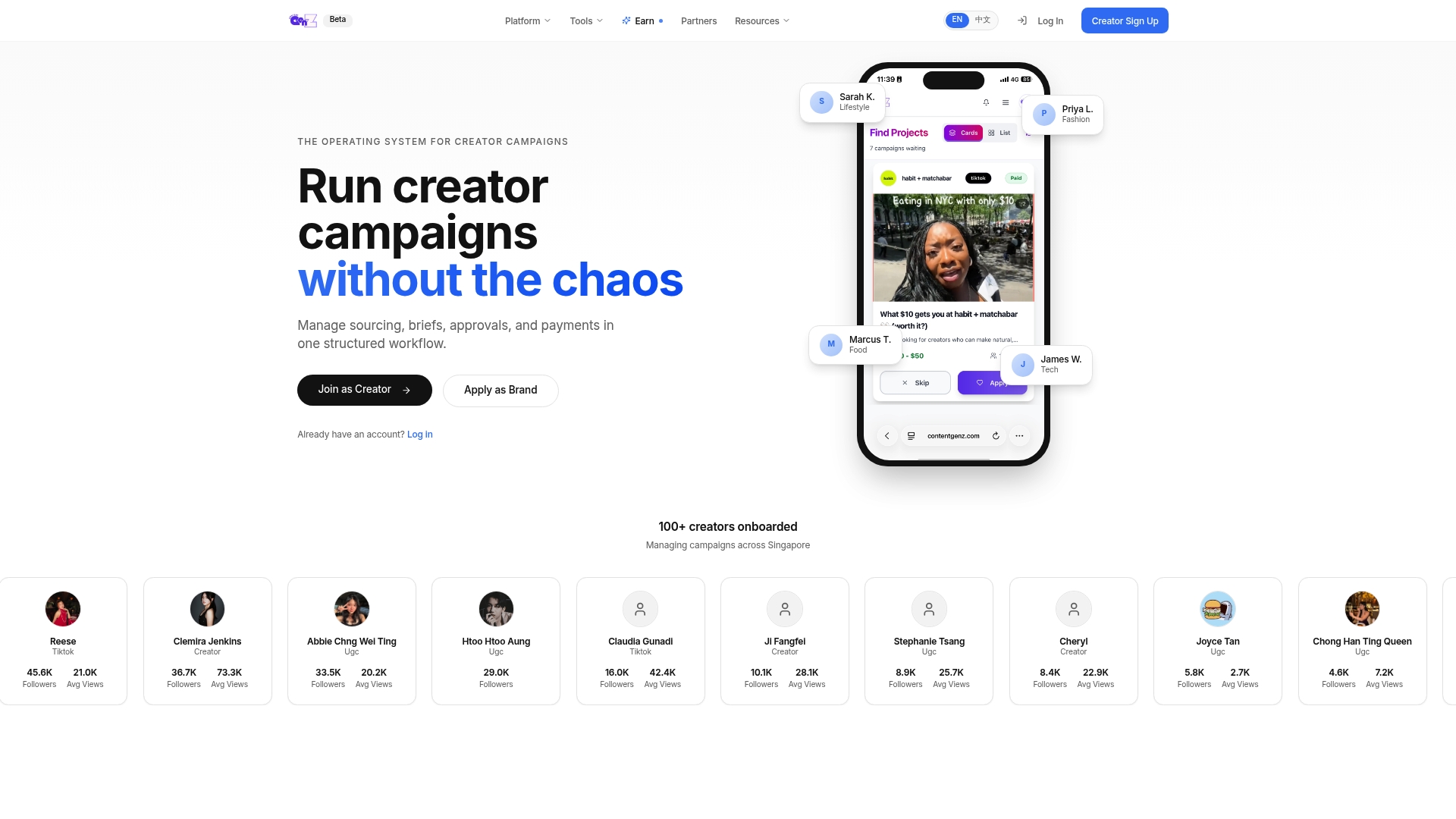
If you want a tool designed for teams running multiple campaigns with a clear view of creator relationships and payment workflows, visit Contentgenz. See how you can manage unlimited creator applications and campaigns with a single subscription, reducing surprises and saving hours weekly.
FAQ
What features make Contentgenz suitable for influencer marketing campaigns?
Contentgenz automates campaign workflows from brief to payment, including legal contract generation. This feature simplifies the entire process, making it easier for brands and agencies to manage influencer relationships efficiently. You can expect a streamlined approach to handling campaigns without the hassle of manual paperwork.
How does Contentgenz compare to Influencity in terms of functionality?
Influencity excels in influencer discovery and comparison, offering detailed audience analysis tools. While this makes it a strong choice for brands focusing on research and audience matching, Contentgenz is better for those seeking comprehensive campaign automation from start to finish. This differentiation is significant if you prioritize workflow efficiency over extensive discovery features.
Can Contentgenz support ongoing creator relationships effectively?
Contentgenz allows unlimited creator applications, which benefits teams looking to maintain long-term relationships with creators. This setup centralizes communication and makes it easier to rehiring creators for multiple campaigns. Investing in Contentgenz could help streamline ongoing collaborations with influencers.
What pricing options are available with Contentgenz?
Contentgenz starts at $99 per month for solopreneur and brand plans, which makes it budget-friendly for smaller companies. This clear pricing structure aids decision-making for brands wanting to keep costs predictable while managing influencer campaigns.
Is Contentgenz suitable for teams looking to run recurring influencer programs?
Contentgenz is designed specifically for small to medium brands and marketing agencies that want to manage recurring influencer campaigns. The flat monthly fee structure enables predictable budgeting, allowing teams to plan effectively without worrying about fluctuating costs.