

Managing creator campaigns, payments, and content workflow often leads to wasted time and budget surprises for marketing teams and agencies. Most platforms charge unpredictable per-project commissions, have limited automation, or require complex manual coordination between briefs, payments, and approvals. This list compares pricing, workflow automation, and network size so marketing teams and agencies can choose a UGC management platform that fits their campaign needs and budget.
Table of Contents
ContentGenZ
At a Glance
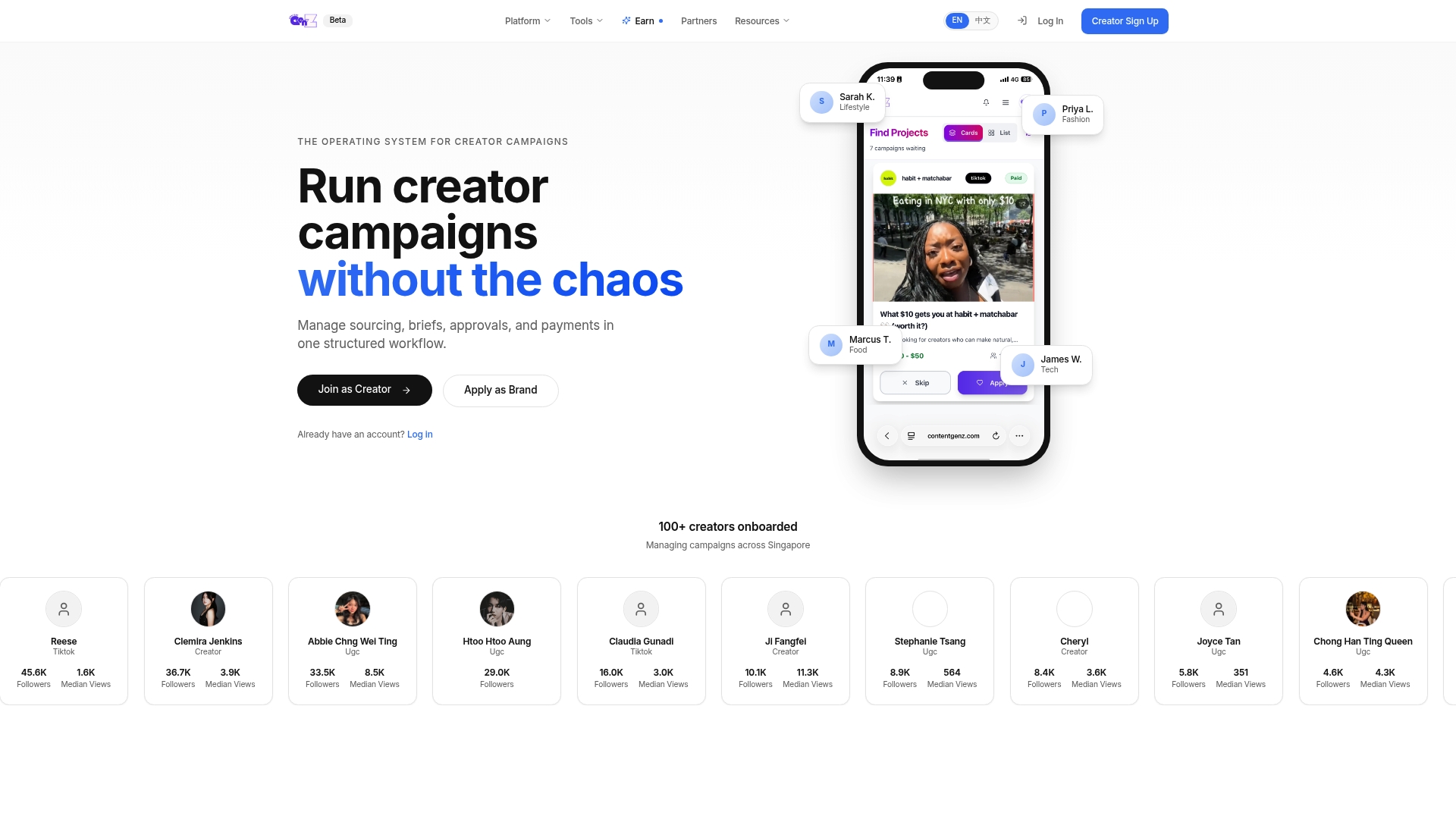
ContentGenZ runs on a flat monthly fee that lets brands run unlimited campaigns and work with unlimited creators without transaction fees. The platform automates briefs, approvals, contracts, and direct creator payments in a single dashboard. It is currently in private beta and focuses on Singapore and Southeast Asia.
Core Features
The product centralizes campaign workflows from briefing to payment and automates contracts, approvals, and revision cycles so teams keep a single audit trail. It supports sourcing and reviewing creator applications, negotiation tools, and direct invoices tied to Stripe Connect for payments. Plans use flat monthly pricing rather than per-transaction commissions.
Key Differentiator
The standout feature is the flat subscription model that covers unlimited campaigns and creators while removing marketplace commissions. That model shifts cost predictability to a monthly line item and reduces per-campaign variable spend. For teams running recurring influencer programs this pricing structure changes how budgeting and forecasts behave.
Pros
No platform commissions means both brands and creators keep more of the budget. Automation of legal contracts, deliverable reviews, and payment processing reduces manual handoffs and cut down administrative time per campaign. The unified dashboard supports re-hiring preferred creators and running multiple simultaneous campaigns, which helps agencies juggling several clients.
Cons
- Beta status may limit creator discovery depth and advanced analytics while the platform grows
Notable Integrations
- Stripe Connect for direct payments and a full audit trail of creator payouts.
Who It's For
Small and medium sized brands and marketing agencies that run ongoing creator campaigns and prefer predictable monthly pricing. Teams that rehire creators and want to keep campaign management and payments inside one platform will find the workflow useful. Creators who want direct payments without platform commissions also fit the model.
Unique Value Proposition
Creators receive 100% of their earnings while brands pay a predictable monthly fee with no commissions. That arrangement reduces friction in negotiations and simplifies accounting for both sides. For teams billing campaigns to internal stakeholders, the model replaces variable commission costs with a stable subscription cost.
Real World Use Case
A Singapore based F and B chain uses ContentGenZ to source micro influencers for monthly product drops. The team automates brief posting, approvals, and payments, cutting hours from each campaign setup. The platform helped the brand keep recurring creators on retainer and speed up content delivery.
Pricing
Plans start at $99 SGD per month for Solo brands, with higher tiers for growing brands and agencies. Growth and agency tiers add support for multiple brands and concurrent campaigns and include unlimited creator capacity.
Website: https://contentgenz.com
influee.co
At a Glance
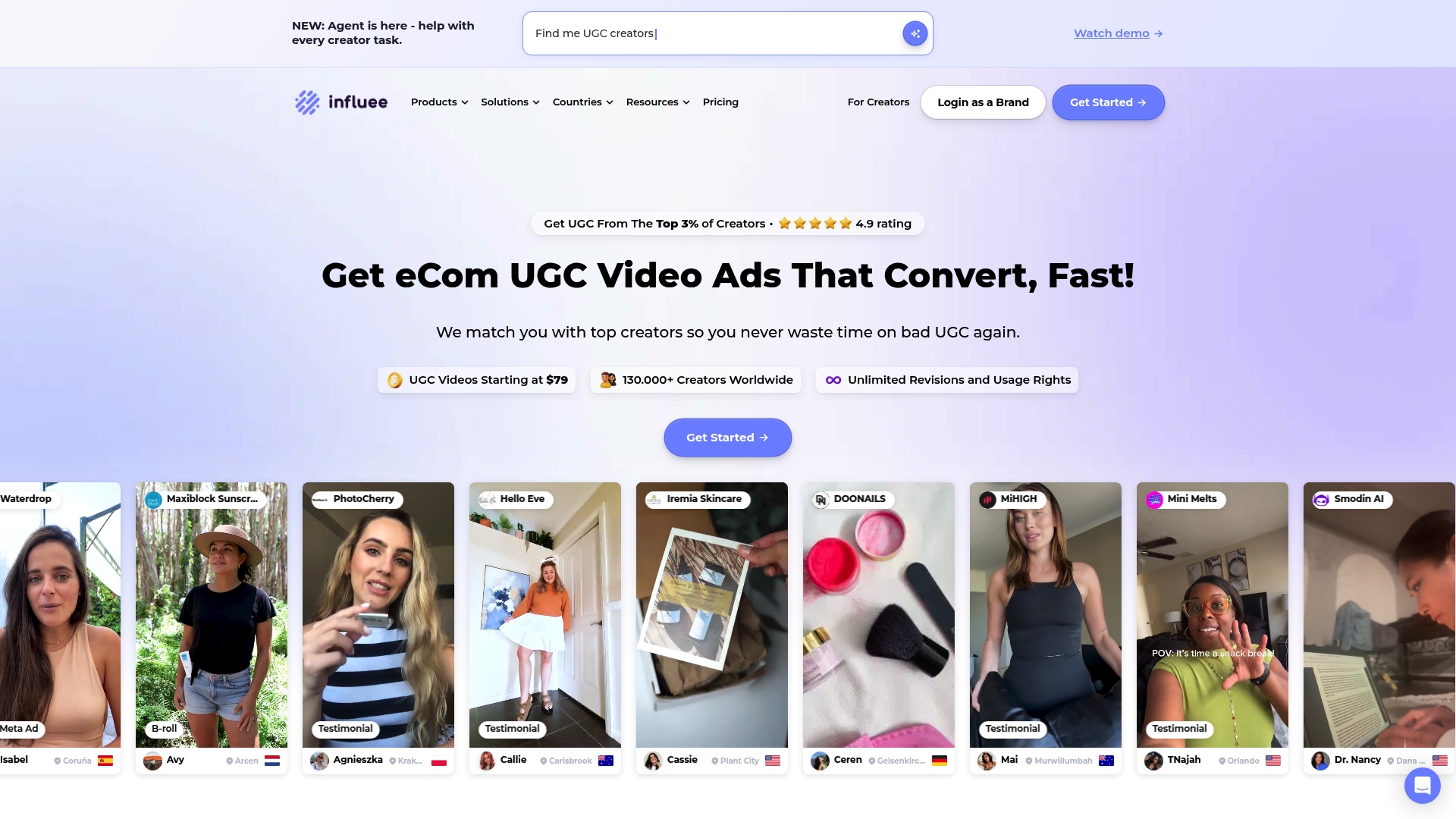
Influee reports a vetted network of over 130,000 creators worldwide. The platform combines on-demand UGC production with campaign agents and automated editing to shorten content production cycles. That mix gives marketing teams a single supplier for creator sourcing, rights, and automated video edits.
Core Features
Influee centralizes campaign types into on-demand creation, influencer marketing, and automated video editing with subtitles in 65 languages. The platform includes unlimited revisions and explicit usage rights for delivered assets. Agents connect workflows to ChatGPT, Claude, and MCP tools to manage briefs and handoffs.
Key Differentiator
The product pairs a claimed top 3% creator selection process with automation and legal rights management. That combination focuses on quality control and operational handoff for teams that must produce volume content while keeping usage clear.
Pros
A rigorous creator vetting process reduces time spent screening talent and raises the baseline quality of submissions. Automated workflows and the AI-powered UGC video editor speed edit turns and add subtitles across formats. Unlimited revisions and included usage rights remove repeated license negotiations, which helps agencies and brands keep campaigns on schedule. Integrations with chatbots and MCP tools let internal ops automate brief creation and review steps.
Cons
-
Pricing can be prohibitive for small brands or solo entrepreneurs. This limits access for tight-budget projects.
-
Free trial options are limited, and refunds apply only if no creators engage. New users may find onboarding risky.
-
Creator payments sit outside subscription fees, which adds transaction complexity and higher variable costs.
When It May Not Fit
Small or one-person brands will likely find costs and billing complexity a poor match. Teams that need a free sandbox to test formats will face limited trial options. Organizations that prefer a single bundled vendor fee rather than separate creator payouts may find the billing model awkward.
Notable Integrations
-
ChatGPT for brief generation and workflow automations.
-
Claude for campaign agent workflows.
-
Notion for project notes and approvals.
-
Shopify for commerce-linked creative briefs.
-
Motion, AdManage, and Meta for asset delivery and ad ops.
Who It's For
Mid to large-sized brands and agencies seeking volume UGC production and legal clarity will benefit most. Marketing operations teams that already use chatbots or MCP tools will find the integration model useful. Small solo creators or microbrands are not the intended customer.
Real World Use Case
A skincare brand used Influee to source TikTok and Instagram creators, run agent-managed campaigns, and automate ad edits with the platform editor. The brand replaced manual handoffs with agent workflows and reduced internal review steps. That approach supported a faster rollout across paid and organic channels.
Pricing
Plans start at $229/month for the Starter plan and scale to tailored Enterprise solutions. Creator payments are separate and priced per content project. Brands should budget subscription and variable creator fees when planning campaigns.
Website: https://influee.co
Trend
At a Glance
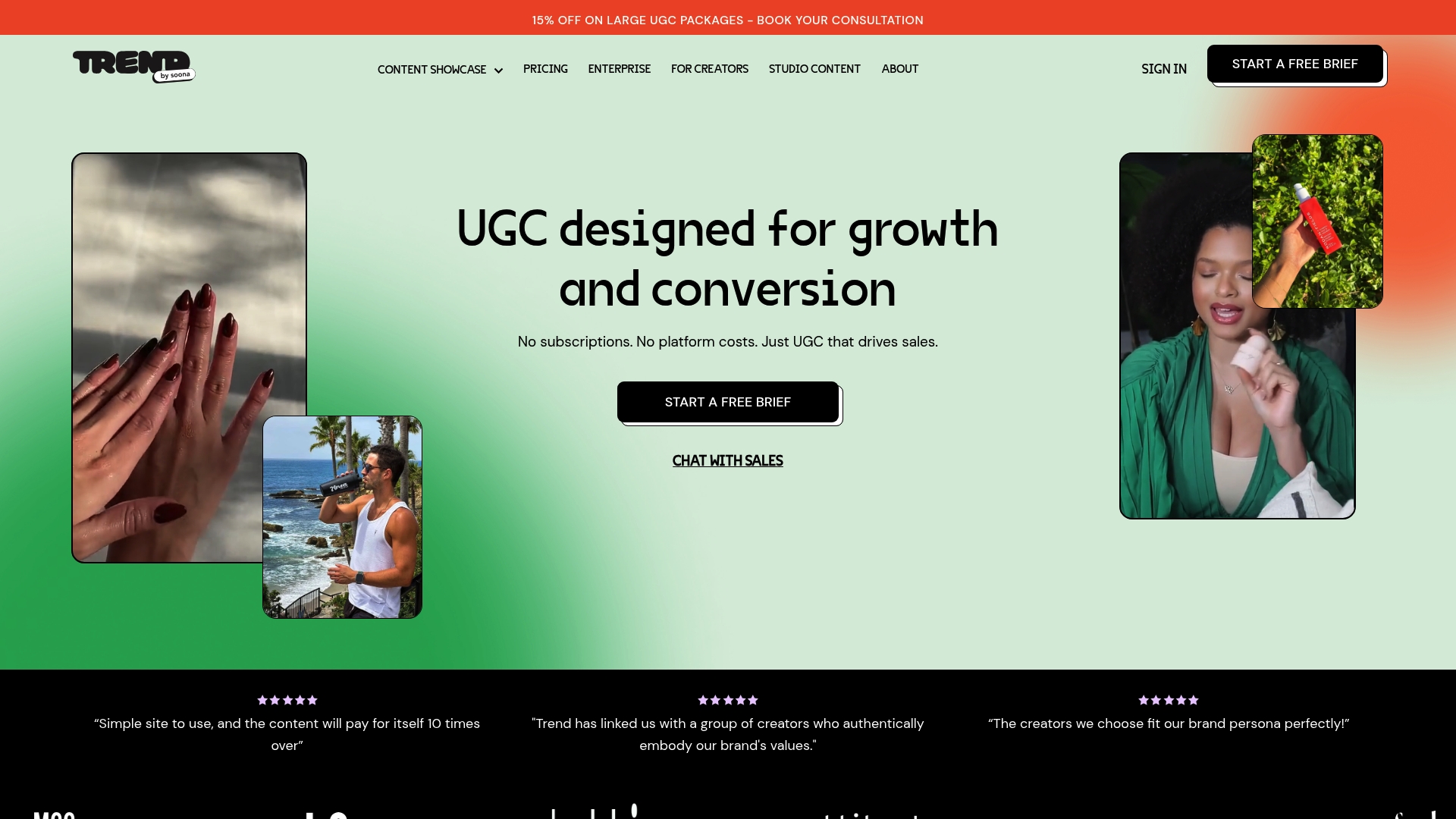
Guaranteed content production or reimbursement backs every order, giving brands a clear risk transfer. Trend reports a network of thousands of creators, which the platform uses to fulfill diverse visual requests. Pricing relies on Creator Credits and starts at $550 for the Starter plan.
Core Features
The self-serve interface lets marketing teams submit briefs, request revisions, and manage deliveries without a long onboarding process. The platform offers content in any location or setting and supports unlimited project requests, with full licensing rights for all delivered assets. Guaranteed delivery and transparent Creator Credit pricing aim to keep volume production predictable for campaign calendars.
Key Differentiator
Trend’s stated edge is its vetted creator network combined with a money-back guarantee when content is not delivered. That combination plus explicit licensing removes negotiation friction for reuse across ads, websites, and social. For teams that need many short-form assets quickly, that network and guarantee pair is the core selling point.
Pros
The self-serve flow simplifies ordering and reduces back-and-forth with creators, so you can place many small requests. The platform’s creator pool spans multiple niches, which helps when you need varied voices and settings in one campaign. Full licensing rights and a credit-based price model make reuse and budgeting easier for ongoing programs.
Cons
- Content quality can vary. Some users report uneven output from different creators.
- Customer support response times are slow according to several reports, which delays problem resolution.
- The creator vetting process is not transparent, leaving teams uncertain about quality control.
- The billing and credit system can feel opaque and confusing for finance teams.
When It May Not Fit
If your campaigns demand consistent, studio-grade production with a tight creative direction, Trend may not meet that bar. If you need rapid, hands-on support during launches, the reported slow support could become a bottleneck. Companies that require detailed visibility into creator qualifications or audit trails for procurement may find the platform’s vetting and billing workflows insufficient.
Who It's For
Marketing teams and brand managers who need to scale visual content quickly will get the most value from Trend. Teams planning to run high-volume social campaigns or refresh product imagery frequently will benefit from the credit model and licensing. If you need modest oversight and a variety of creator styles, this matches that operational profile.
Real World Use Case
A skincare brand orders multiple influencer videos and product photos across platforms to keep social channels active. Using credits, the team requests regular batches of unboxing clips and testimonial snippets and then repurposes the licensed assets for ads and site galleries. That approach cuts reliance on single full-production shoots and shortens update cycles.
Pricing
Starter pricing begins at $550 and the platform lists per-piece rates within basic packages, for example roughly $91.67 for videos and $36.67 for photos. Higher-tier plans offer lower per-piece rates for larger volumes and frequent buyers.
Website: https://trend.io
SHOUT
At a Glance
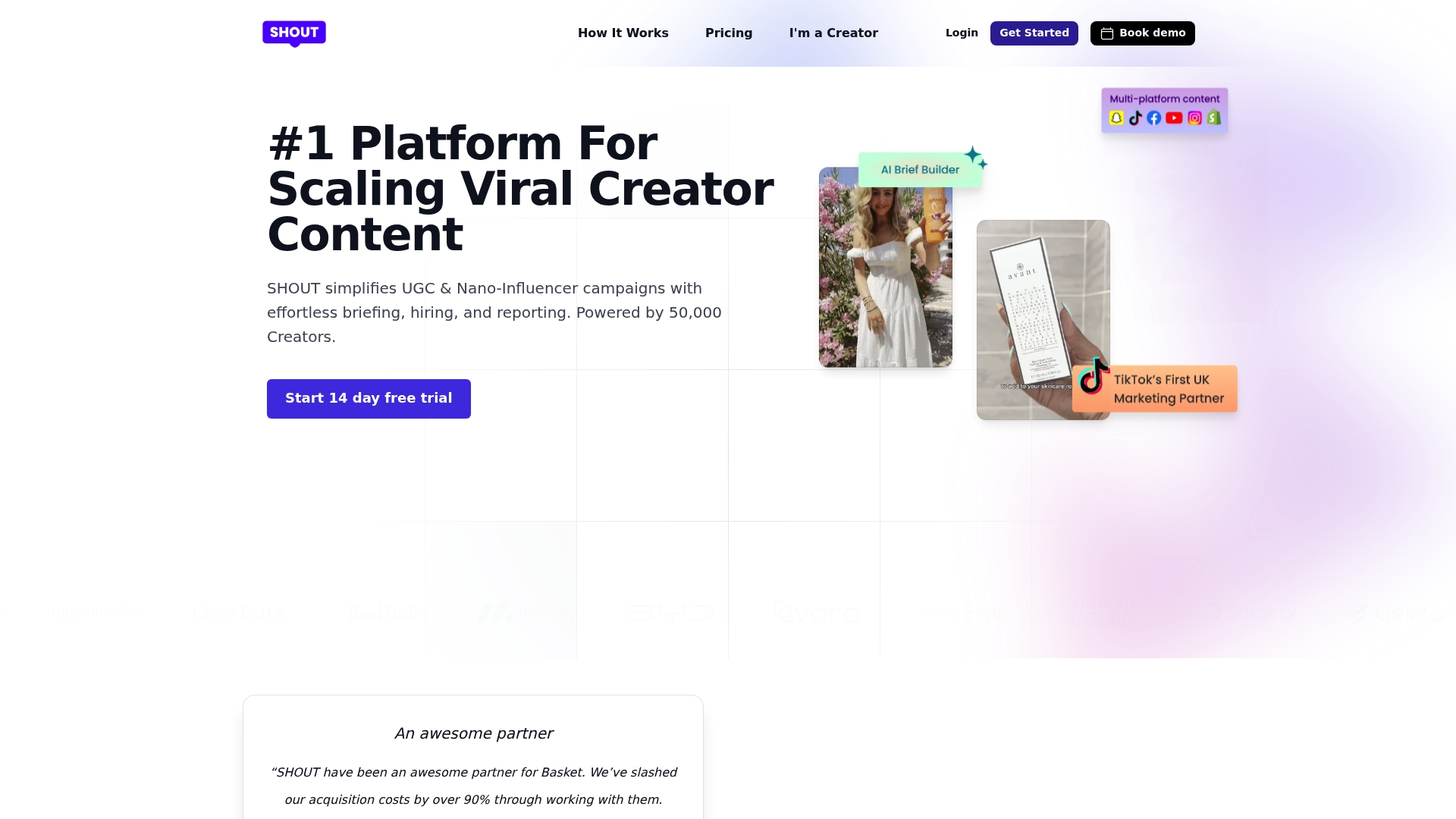
SHOUT reports a network of 50,000+ vetted creators. The platform targets UGC and nano influencers across TikTok, Instagram, YouTube, and Snapchat. It combines briefing, hiring, campaign analytics, and instant creator payments for brands and agencies.
Core Features
Campaign teams can run briefs, hire creators, collect content, and produce reports through a single campaign workflow. It supports videos and influencer posts across major social channels and includes AI moderation and analytics to flag quality issues and surface performance trends. Platform tools also track approvals and move funds to creators immediately after content approval.
Key Differentiator
SHOUT's key advantage is its built in tools for briefing, vetting, managing, and analyzing campaigns paired with an extensive network of verified creators. That approach suits teams that need volume and campaign orchestration across platforms. It serves a different audience than creator first marketplaces that prioritize creator payouts over brand managed campaign control.
Pros
The interface feels easy to use for campaign teams who manage multiple creator briefs. That figure offers reach across many creator profiles and helps scale campaigns without manual sourcing. Analytics and real time tracking give brands visibility into content performance and approval status. Instant payments after approval reduce administrative overhead for agencies handling many small transactions.
Cons
- Content quality can vary if creators do not follow briefs or if the review process is light.
- Pricing may be expensive for small brands or solo creators because subscription and per content fees add up.
- Some teams find the feature set complex when they lack experience with influencer campaign workflows.
When It May Not Fit
If you need strict control over final content you may face gaps when creators fail to meet standards. If your campaigns are very small or you manage only one or two creators, costs may outweigh benefits. Teams that prefer direct creator payout arrangements may prefer platforms that emphasize creator earnings over brand managed campaigns.
Who It's For
Brands, agencies, and marketers aiming to scale social content across TikTok, Instagram, YouTube, and Snapchat will find SHOUT relevant. Campaign managers who need a large vetted creator pool and built in briefing plus analytics will get the most value. It fits teams that prioritize volume and managed approvals over sole focus on creator payouts.
Real World Use Case
A brand launching a new product runs a TikTok campaign with SHOUT to recruit micro and nano creators. Creators deliver short videos, the brand tracks engagement with analytics, and payments clear immediately after approval. The campaign leverages TikTok Spark Codes to amplify reach.
Website: https://shoutugc.com
GRIN
At a Glance
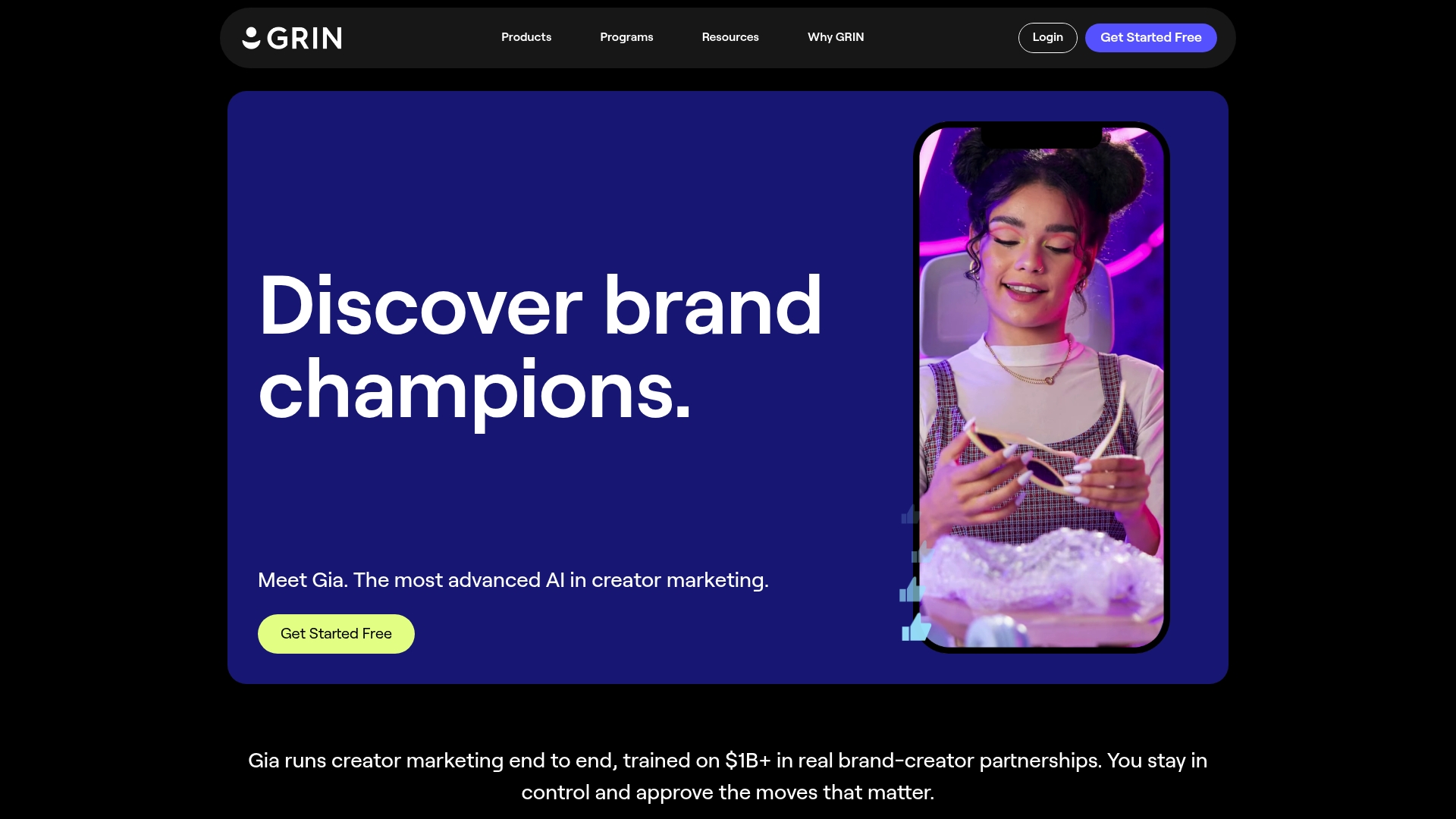
GRIN's marketing materials state the platform includes an AI assistant called Gia that automates discovery, outreach, and content optimization. The product centralizes influencer search, relationship management, content cataloging, and payments in one place. It targets brands running moderate to large influencer programs and offers a 30-day free trial.
Core Features
GRIN combines influencer discovery and recruitment with a relationship management workspace that tracks conversations and deliverables. The platform organizes creator content and usage rights while capturing campaign performance and analytics. Integrated messaging, gifting, and payments connect with ecommerce and communication tools so teams can move from outreach to payment without switching tabs.
Key Differentiator
That assistant, Gia, is the feature GRIN emphasizes for workflow automation. It is trained on industry datasets to suggest creators, draft outreach, and recommend content tweaks. The assistant aims to reduce manual discovery and repetitive campaign tasks for busy marketing teams.
Pros
GRIN saves time by automating outreach, contracts, payments, and content cataloging so teams spend fewer hours on manual tasks. The platform has consolidated reporting that helps compare campaign performance and creative assets in one place. Customer success managers and the integration set make it easier to connect commerce data with influencer outcomes, which supports program scaling for brands.
Cons
-
Technical tracking problems have been reported, including affiliate code issues that affect measurement accuracy.
-
Users note occasional system slowdowns and recent feature removals that break established workflows.
-
The AI assistant sometimes struggles with complex tasks and needs further refinement for nuanced outreach.
-
Support responsiveness varies, which can delay fixes for urgent campaign problems.
When It May Not Fit
If you require rock-solid, enterprise-grade uptime for mission-critical campaigns, GRIN's reported system instability under heavy load may be a risk. Small teams with minimal influencer volume will likely find the platform more than they need. If you depend on a feature that recent updates removed, plan for potential workflow redesign or ask about roadmap timing.
Notable Integrations
GRIN integrates with Shopify, Gmail, Outlook, Klaviyo, Dropbox, Box, Google Drive, and PayPal. These connectors let marketing teams sync orders, import creator assets, and process payments without manual exports.
Who It's For
Brands and marketing teams managing extensive influencer programs will get the most from GRIN. Teams that need automated outreach, centralized content rights tracking, and commerce integrations should evaluate it. Smaller teams focused only on occasional collaborations may find a lighter tool more cost effective.
Real World Use Case
A consumer goods company used GRIN to find niche creators, coordinate campaign briefs, and automate payments. The team cataloged creator content and tracked ROI inside the same platform. That workflow replaced months of spreadsheets and scattered email threads.
Pricing
GRIN does not publish fixed pricing and typically customizes plans for enterprise needs. The vendor advertises a 30-day free trial for teams that want to test the platform before committing to a contract. For exact costs you must contact sales for a tailored quote.
Website: https://grin.co
nowfluence
At a Glance
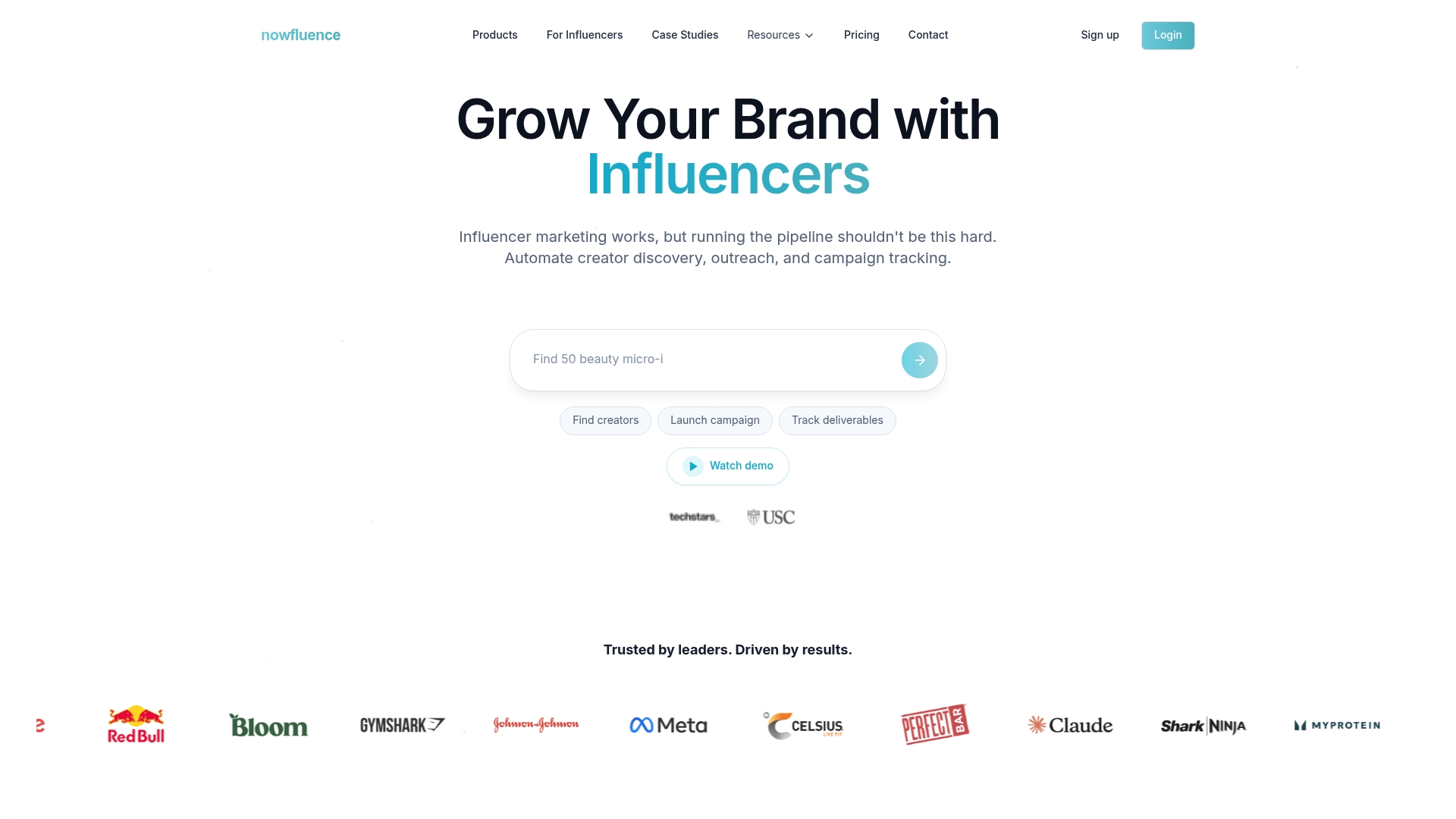
Shopify integration enables direct revenue attribution from influencer posts. Nowfluence combines automated creator discovery, mass personalized outreach, and deliverable tracking, so brands can connect impressions to sales. The platform offers both a self-serve product and access to expert campaign managers for brands that want extra hands-on support.
Core Features
nowfluence uses AI to find and vet creators, then automates outreach and follow-ups while logging replies and deliverables in a campaign dashboard. Real-time analytics and attribution report engagement and sales, with deliverable performance tracked across Instagram, TikTok, and YouTube. The platform also generates creator media kits, monitors brand mentions, and supports large-scale personalized messaging and Shopify revenue attribution.
Key Differentiator
The strongest angle is end-to-end automation that covers discovery, outreach, campaign management, and ROI measurement. That focus suits teams that want to run large creator programs with minimal manual outreach. It addresses a narrower need than platforms designed around creator payment models or intensive hand-curated partnerships.
Pros
Automated discovery and outreach cut manual sourcing and email work so you can scale campaigns without growing headcount. Shopify attribution moves reporting beyond vanity metrics to revenue-linked results, and real-time dashboards centralize deliverables and performance. The option to use the self-serve platform or engage expert campaign managers gives flexibility for teams that lack in-house influencer operations.
Cons
- Pricing starts from $99/month and often follows a custom model. That structure may strain very small brands or solo marketers.
- The platform depends on AI and data accuracy. For niche campaigns that need highly personalized rapport, manual outreach can still outperform automation.
- Integrations beyond Shopify and social analytics are limited. Teams that require broad marketing stack connectivity may find gaps.
When It May Not Fit
If your campaign relies on one-off, relationship-driven outreach, this product may feel too automated. If you need many prebuilt integrations across ad platforms, CRMs, or analytics tools, integration limits will slow implementation. Very small businesses with strict budget constraints may find the custom pricing model a poor match.
Notable Integrations
- Shopify for revenue attribution and order-level tracking.
Who It's For
Brands and marketing teams that run frequent influencer campaigns and want to scale creator outreach without adding staff will get the most value. Agencies managing multiple clients who need mass personalized messages and performance tracking also fit well. Teams that want direct sales attribution from creator activity will benefit from the Shopify connection.
Real World Use Case
A consumer goods brand used nowfluence to discover relevant microinfluencers, run mass outreach with personalized templates, and centralize approvals in the campaign dashboard. The brand tracked engagement and linked attributed sales back to Shopify to calculate program ROI. That workflow replaced several manual spreadsheets and reduced time spent on creator sourcing.
Pricing
Free to get started, with a self-serve plan from $99/month and custom pricing for managed campaigns. The vendor offers managed services for brands that prefer an agency-style arrangement rather than DIY campaign execution.
Website: https://nowfluence.co
Comparison of alternatives
ContentGenZ offers a flat-rate pricing model that allows brands to launch unlimited campaigns without worrying about escalating fees, positioning it as a flexible and cost-effective choice for many marketing teams. Each alternative presents unique advantages and tradeoffs depending on operational priorities such as creator network size, tools, and pricing models.
Cost Predictability and Ease of Deployment
For marketing teams that value cost control, ContentGenZ's flat subscription fee with unlimited campaign capacity proves advantageous, simplifying budgeting compared to usage-based or credit systems like Trend's pricing model. Small and medium-sized brands avoid variable transaction fees, enabling a clearer forecast for content investments.
Specializations in Creator Networks and Workflow Automation
While ContentGenZ supports key automation from briefing to payment, influee.co stands out with its rigorous creator vetting and advanced AI-powered video editing tools, making it ideal for brands needing high-quality content production with subtitles available across 65 languages. Meanwhile, SHOUT's real-time analytics and instant payment mechanisms address active performance monitoring.
Best fit
- Brands requiring predictable campaign budgeting and unlimited creator partnerships will benefit most from ContentGenZ's flat-rate plans inclusive of all operations.
- High-volume content needs with legal rights automation justify selecting Trend for organizations prioritizing guaranteed delivery.
- Diverse creator networks and specialized AI-enabled content editing make Influee.co advantageous for product launches demanding cross-platform creative adaptation.
- Teams aligning pay-to-performance metrics with direct revenue workflows could benefit from nowfluence's creator attribution integration.
Our pick
ContentGenZ's unique flat subscription model for unlimited campaigns and creators eliminates commission fees, serving teams seeking budget clarity and scalable operations. However, when high-volume, specialized content production or revenue-focused campaigns are prioritized, alternatives like influee.co or nowfluence may offer better fitting solutions through specialized features. Overall, ContentGenZ delivers exceptional value to teams managing recurring influencer programs smoothly and efficiently.
Choosing the right platform involves evaluating features like campaign automation, creator networks, and pricing models to meet your specific business needs.
| Platform | Key Feature | Ideal User | Pricing | Limitation |
|---|---|---|---|---|
| Contentgenz | Unlimited campaigns and creators, no fees | Brands/agencies seeking predictable costs | Starts at $99/month | Beta limits creator discovery and analytics |
| influee.co | Vetted global network of 130,000 creators | Large teams needing quality content | Starts at $229/month | High cost for smaller brands or solo marketers |
| Trend | Guaranteed content production | Teams needing diverse, reusable assets | Starts at $550 | Transparent quality oversight needed |
| SHOUT | Instant campaign payments for creators | Larger teams managing high-volume content | Pricing not listed | Complexity may overwhelm inexperienced teams |
| GRIN | AI-assisted influencer campaign management | Teams managing extensive creator programs | Price not published | Performance issues under heavy use |
| nowfluence | AI-based creator discovery with Shopify link | Teams attributing influencer ROI to sales | Starts at $99/month | Limited integrations beyond Shopify |
Challenges in Choosing the Best UGC Platforms for Recurring Campaigns
Brands running ongoing creator programs often face uncertainty with variable transaction fees and scattered workflows. Managing multiple creators while keeping budgets predictable can feel overwhelming. Contentgenz tackles these issues by offering a flat monthly fee that covers unlimited campaigns and creators, eliminating platform commissions. This design helps small and medium sized brands and agencies maintain control and cut administrative hours.
Contentgenz focuses on clear workflows from sourcing to payment, with creators receiving 100% of their earnings and brands managing everything in one centralized dashboard. Learn how this approach reduces campaign setup time and improves creator retention at Contentgenz. Explore how to simplify your creator campaigns and see your budgets stretch further with transparent monthly plans.
FAQ
What unique pricing structure does Contentgenz offer for UGC campaigns?
Contentgenz uses a flat monthly pricing model for unlimited campaigns and creators without transaction fees. This feature simplifies budgeting for brands and ensures predictable costs compared to traditional per-transaction models.
How does Contentgenz compare to Influee in terms of creator sourcing?
Influee boasts a vetted network of over 130,000 creators, ensuring high-quality submissions while reducing time spent screening talent. Contentgenz, however, centralizes campaign workflows and automates processes like briefs and payments, making it easier for teams managing ongoing creator campaigns.
What are the automation features that make Contentgenz appealing for marketers?
Contentgenz automates briefs, approvals, contracts, and direct payments in a single dashboard. This streamlining reduces manual handoffs, saving time and effort for marketing teams working on multiple campaigns.
Is Contentgenz suitable for small brands with tight budgets?
Small brands might find Contentgenz’s flat-rate monthly fee beneficial as it prevents unexpected costs associated with per-transaction commission models. This approach can make continuous influencer engagement more budget-friendly for smaller teams.
Can I expect high-quality outputs from Contentgenz?
While Contentgenz automates many aspects of campaign management, the quality of content ultimately depends on the creators selected. Brands looking for high-quality creator outputs should ensure they choose from a diverse and vetted creator pool.