

Managing influencer campaigns across multiple tools raises costs and causes confusion about creator payments. Most influencer marketing platforms charge per transaction or require tiered subscriptions, making budgeting unpredictable for marketing teams and agencies. This article compares flat-fee, AI-driven, and integrated influencer marketing software so teams can pick a platform that matches their campaign workload and cost preferences.
Table of Contents
ContentGenZ
At a Glance
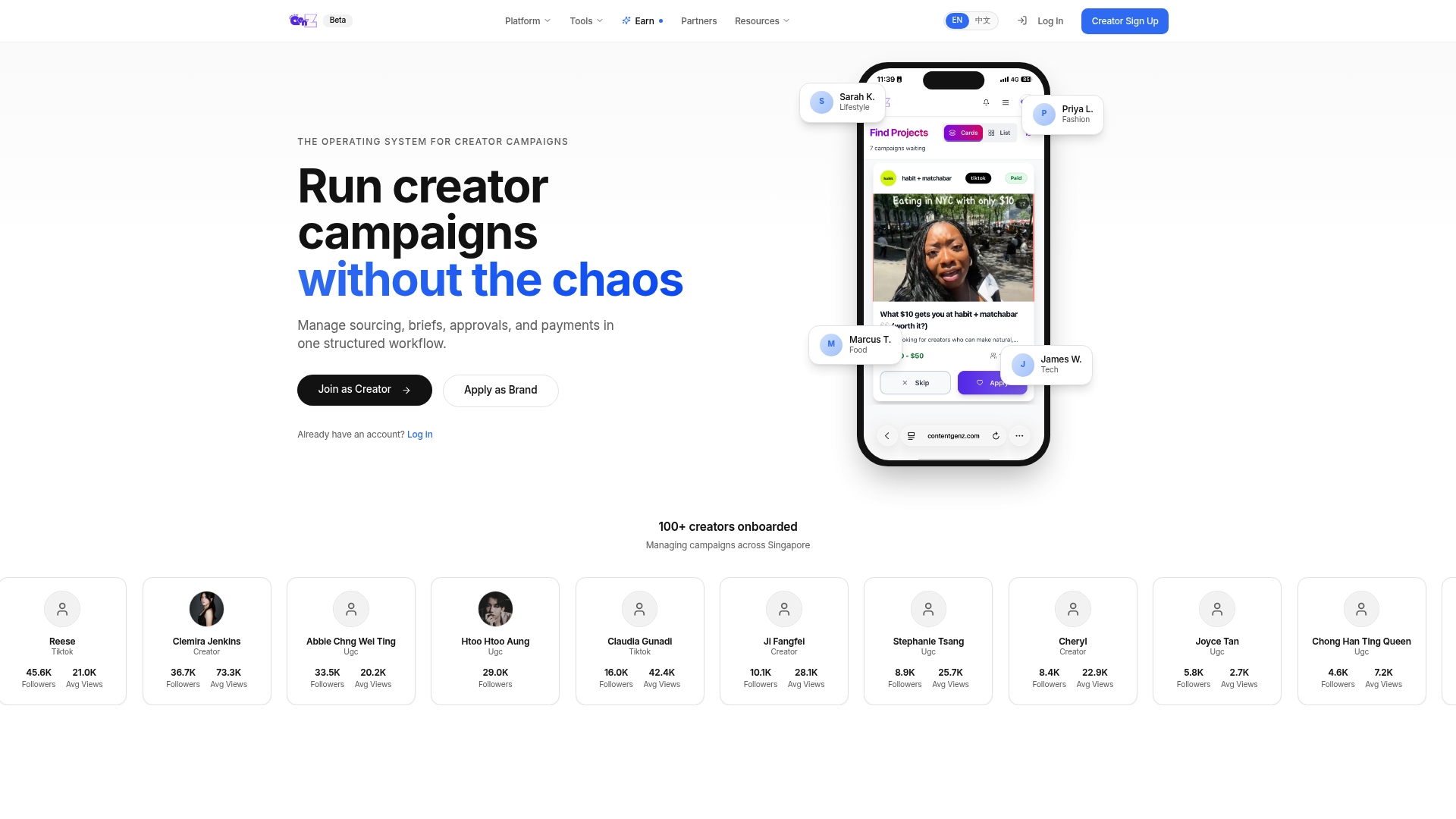
ContentGenZ lets creators keep 100% of their earnings while brands manage campaigns under a flat subscription. The platform centralizes sourcing, briefs, approvals, and payments so teams avoid per-transaction fees. That model targets repeated collaborations and predictable budgeting for ongoing influencer work.
Core Features
ContentGenZ provides a structured workflow for sourcing, brief creation, application review, approvals, and payment tracking. It automates contract generation and review and connects direct payments through Stripe with invoice tracking. The platform also includes campaign management for negotiation, revisions, analytics, and a creator referral program to support recurring partnerships.
Key Differentiator
The platform charges a flat monthly fee and removes commission costs, letting brands run multiple campaigns without per-creator transaction fees. That fee model pairs with automated workflows so campaign setup, contracting, and payout happen inside one system rather than across multiple tools. The result is predictable campaign overhead and clearer budgeting for scaled influencer programs.
Pros
Flat fee pricing removes commission surprises and makes campaign costs predictable for monthly planning. Automation for contracts, approvals, and payments cuts repetitive work and reduces the number of manual handoffs between legal, finance, and marketing. Unlimited creator applications within subscription plans lets brands accept high volumes of interest without incremental fees. Direct Stripe payouts and invoice tracking keep creator payment records in one place. The referral program helps retain creators and supports longer term partnerships.
Cons
- The product is in beta and does not yet include priority creator matching and some advanced integrations that are listed on the roadmap. This limits automated discovery for teams that need immediate, high precision matching.
Notable Integrations
ContentGenZ integrates with Stripe for payments to handle direct creator payouts and invoice tracking. That connection simplifies billing and reduces the need for separate payment tools. No other integrations are listed publicly at this time.
Who It's For
Small and medium brands, agencies, and marketers who run regular influencer and user generated content campaigns will benefit most. Teams that need predictable monthly costs and want to build long term creator relationships will find the model appealing. Brands with recurring campaigns and multiple channels will use the platform to centralize campaign operations.
Unique Value Proposition
Creators receiving 100% of earnings while brands pay no platform commissions is the platform’s most concrete economic claim. That setup lowers transaction friction and shifts costs to a single subscription line item. For teams that plan recurring campaigns, that change reduces per-campaign overhead and simplifies finance reconciliation.
Real World Use Case
A direct to consumer brand organizes monthly influencer campaigns across Instagram and TikTok. The team uses ContentGenZ to accept unlimited applications, automate contracts, and issue payments through Stripe. This removes marketplace fees and keeps campaign admin inside one system as the program scales.
Pricing
The Solo brand plan starts at $99 SGD/month. Other plans for larger teams are available, and there is no free tier. The pricing model intends to replace commission fees with predictable subscription costs.
Website: https://contentgenz.com
Influencity
At a Glance
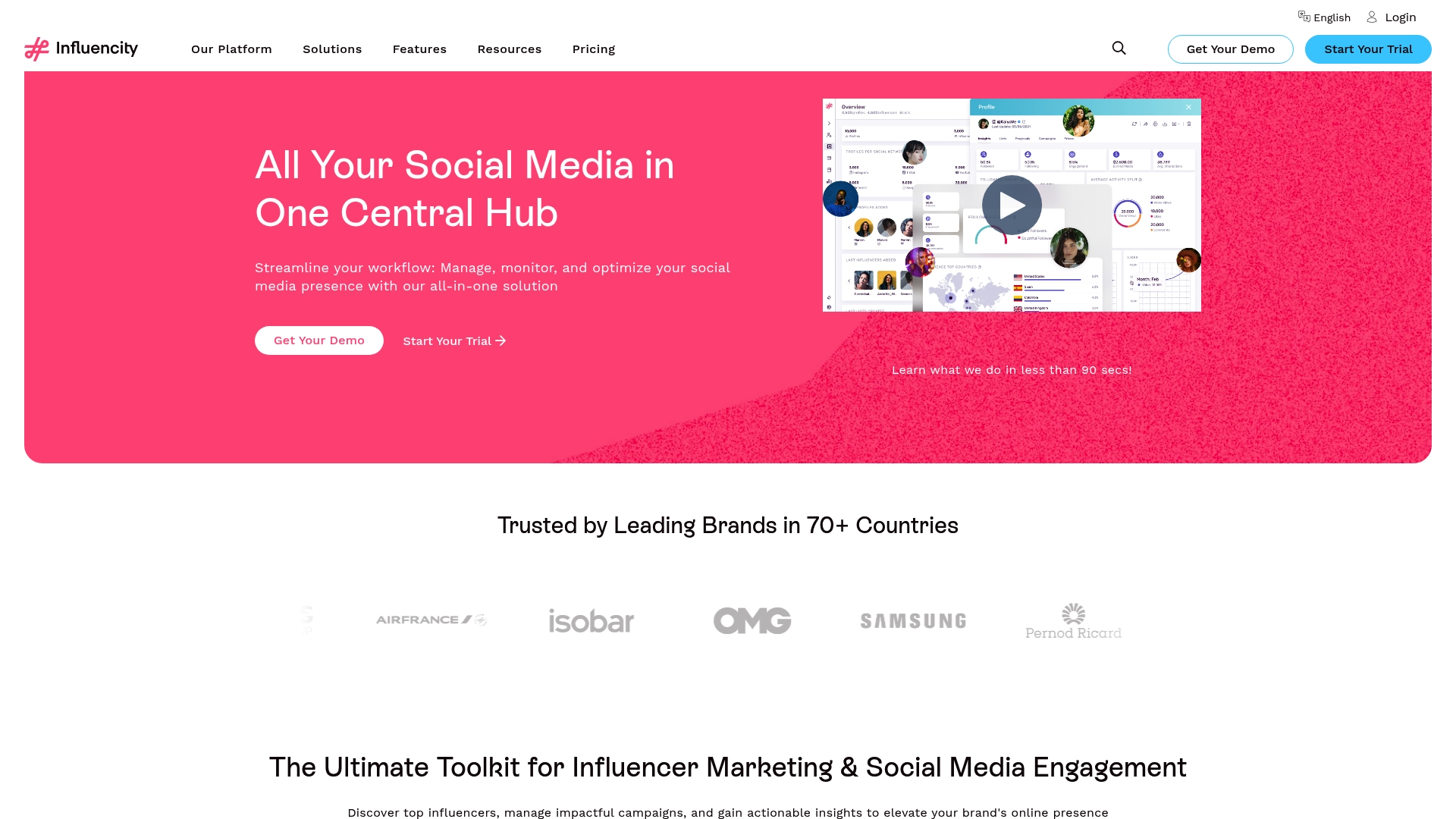
AI-powered influencer discovery and analytics power Influencity's core workflow. The platform combines discovery, outreach, campaign management, and performance reporting in one place. It advertises a 7-day free trial to test core features before committing to a subscription. That trial lowers the barrier to evaluate fit for campaign teams.
Core Features
Influencity lets you find influencers using advanced filters and run AI-driven analysis to compare reach, engagement, and audience attributes. It centralizes influencer contacts and recruitment, manages campaigns with automation, and delivers real-time performance analytics for reporting. The product also includes content planning tools, a unified social inbox, social listening, and competitor monitoring.
Key Differentiator
The platform pairs AI-powered influencer discovery with end-to-end campaign and relationship management, making it a single place to move from sourcing to ROI reporting. That combination reduces the number of separate tools marketing teams must operate. Unlike Contentgenz's model of paying creators 100% and avoiding platform fees, Influencity uses tiered subscriptions for access and features.
Pros
Influencity offers a deep discovery database that speeds up influencer sourcing, and its AI analytics help you prioritize prospects rather than rely only on follower counts. Multi-campaign workflows and automation reduce manual work on outreach and approvals, and the reporting layer surfaces metrics for post-campaign optimization. The vendor also highlights active customer support and industry awards that can reassure procurement teams.
Cons
-
Data accuracy can vary, so you will likely verify audience and engagement figures manually.
-
Refund and subscription policies are reportedly rigid, which may complicate procurement for some buyers.
-
The tiered pricing model can feel complex to new teams and make feature comparisons harder.
-
Some users report occasional mismatches in influencer relevance for niche campaigns.
When It May Not Fit
If your team needs fully transparent per-campaign fees tied to creator payouts, this subscription approach may not match your budget model. Small startups that require simple, low-cost entry pricing could find the tiers confusing. Teams that lack bandwidth to train on advanced features should expect a learning curve before seeing value.
Who It's For
Marketing teams, brand managers, and influencer agencies that need a data-first influencer marketing hub will get the most from Influencity. It fits groups that run multiple campaigns and want to centralize discovery, outreach, and reporting. Teams prepared to invest time in setup and verification will extract the most value.
Real World Use Case
A global consumer brand used Influencity to locate niche creators on Instagram and TikTok, then recruit them and run coordinated campaigns. The team tracked engagement in real time and exported ROI reports to inform budgeting for the next quarter. That workflow shortened reporting cycles and clarified which creator segments delivered business results.
Pricing
Influencity uses flexible tiered subscription plans and offers a 7-day free trial for initial testing. Exact pricing varies by feature set and usage, and the vendor lists customized plans for larger teams. Prospective buyers should request a demo and price quote to compare tiers.
Website: https://influencity.com
Influential

At a Glance
Influential reports a network of more than 15+ million creators. The vendor also advertises facilitation of over $1 billion in campaigns and says more than 60% of the Fortune 500 use the platform. That scale feeds its AI models for creator selection. The platform emphasizes measurable results across social channels and screen placements.
Core Features
Influential combines a comprehensive influencer database with AI driven creator discovery and audience targeting to match brands with creators. The product delivers real time campaign reporting and deep content insights using image recognition and psychographics. It supports cross platform distribution that includes social media and in theater screenings.
Key Differentiator
The vendor positions its approach on using the industry s richest data together with advanced AI to enable precise influencer matching and traceable campaign impact. That focus on data plus machine learning aims to reduce guesswork when you scale multi channel campaigns. The approach targets large programs that need measurable attribution across screens.
Pros
Influential offers a clear campaign workflow that helps teams manage discovery, briefs, approvals, and reporting in one place. Its large creator database makes it practical to scale influencer recruitment without manual outreach. The platform s real time analytics and content recognition tools support hypothesis testing and faster optimization during live campaigns.
Cons
- Steep learning curve for new team members requiring dedicated training and time to reach full proficiency.
- Occasional need for additional vendor support when navigating advanced features and complex reports.
- Customizable modules and enterprise options may require extended onboarding and configuration work.
When It May Not Fit
Smaller marketing teams with limited onboarding bandwidth will likely find the system too complex. Campaigns that need rapid setup by a single person may prefer a simpler discovery tool. If your program cannot allocate vendor support or training time, this platform may add operational friction rather than reduce it.
Notable Integrations
- Major social media platforms for content publishing, measurement, and audience insights.
Who It's For
Marketing teams and agencies managing large influencer programs that prioritize data driven creator selection and multi channel reach. Enterprises seeking tie outs between social performance and broader screen placements will find the platform aligned to their needs. Teams that can invest in training and vendor collaboration will get the most from the tooling.
Real World Use Case
A Fortune 500 brand runs a multi platform campaign and uses Influential s AI models to shortlist creators with matching audience psychographics. The brand deploys content across social channels and theater placements while monitoring real time metrics. The campaign delivers measurable sales lift and clearer attribution between creator activity and conversions.
Pricing
Pricing is not publicly listed and the vendor marks pricing as not applicable on its materials. Enterprise packages typically require a custom quote and often include onboarding services. Expect costs and contract terms to vary by campaign scale and media buy needs.
Website: https://influential.co
Upfluence
At a Glance
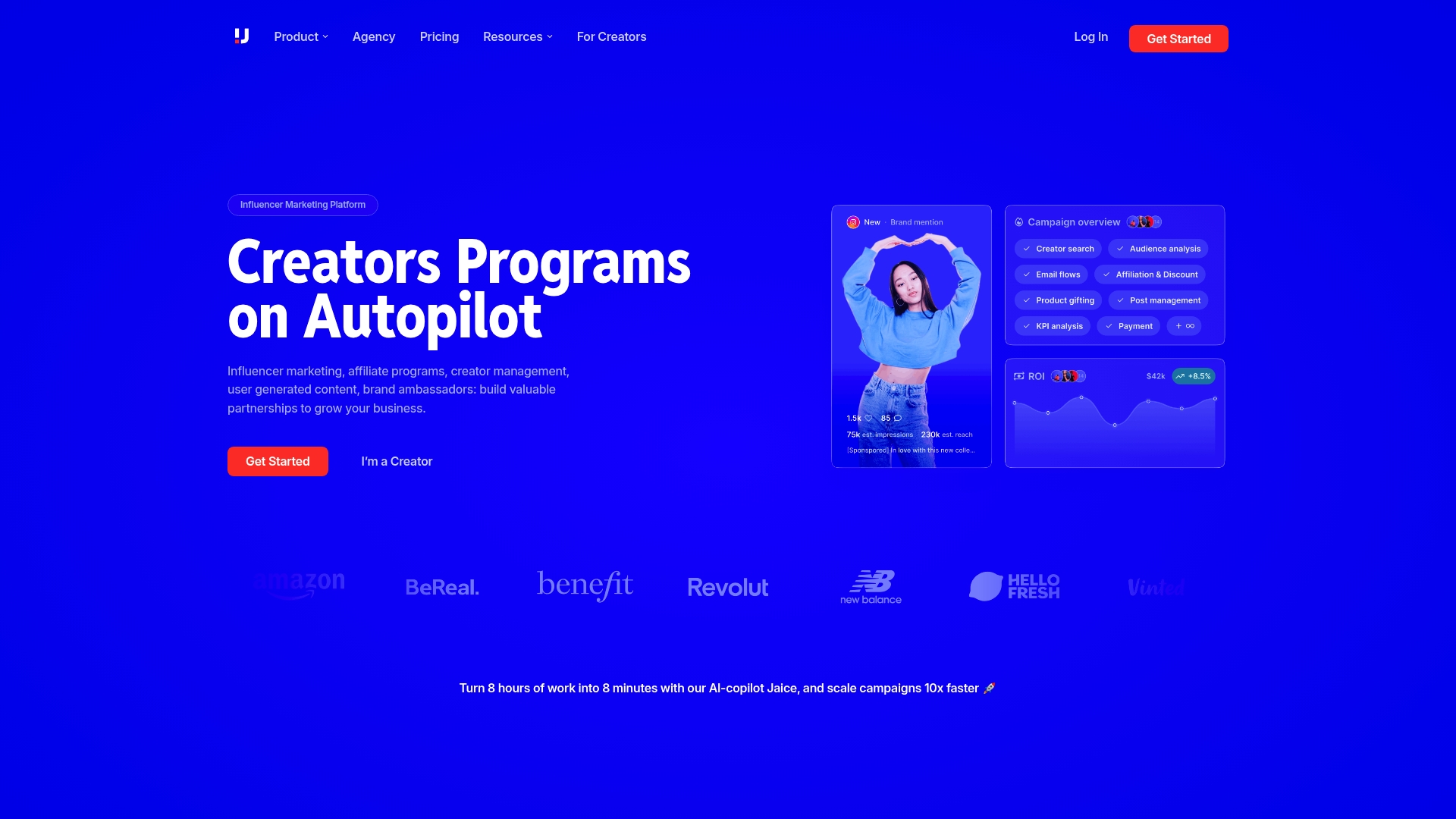
Direct integrations with Shopify, WooCommerce, and Amazon let brands attribute sales to creator activity and automate payouts. Upfluence combines influencer discovery, campaign management, and performance analytics in one product. The platform targets ecommerce teams that need to connect creator work to measurable revenue.
Core Features
The platform offers influencer discovery and vetting using audience and performance signals, plus advanced filters for segmentation. Campaign management covers outreach, content approval, and UGC handling, while performance tracking ties conversions back to campaigns. Automated payments and multi currency payout management reduce manual billing for creators.
Key Differentiator
Upfluence centers on AI-powered creator matching that pairs brand briefs with creator audiences and past performance. That matching works with direct ecommerce integrations to report sales attribution and ROI. The combined focus on creator selection plus ecommerce measurement separates it from general influencer directories.
Pros
Deep influencer data and analytics help you target creators by audience quality and historical performance rather than follower counts alone. The product also handles user generated content from collection to approval, which speeds creative reuse and ad repurposing. Onboarding support and account teams are active, and integrations with Shopify, WooCommerce, Magento, BigCommerce, and Amazon let teams push attribution and payout workflows into existing ecommerce stacks.
Cons
-
Steep learning curve for new users. Training is often necessary to get value from advanced filters and reporting.
-
Mandatory long term contracts for some plans. Small brands or short campaigns may find contractual terms restrictive.
-
Complex setup when integrating multiple platforms. Connecting several ecommerce stores or configuring attribution requires technical time.
When It May Not Fit
Brands that need a quick one off campaign and minimal setup will likely find Upfluence too heavyweight. Small marketing teams without budget for onboarding or long term commitments may prefer a self serve marketplace. Organizations that do not sell through ecommerce channels will not benefit from the platform's core revenue tracking features.
Notable Integrations
- Shopify
- WooCommerce
- Magento
- BigCommerce
- Amazon
These integrations enable sales attribution, automated payout flows, and campaign optimization based on ecommerce metrics.
Who It's For
Ecommerce brands and marketing teams that need detailed analytics and integrated campaign management will get the most value. Teams that want to measure creator driven revenue and automate creator payments will find the platform aligned with their goals. Agencies managing multiple retail clients with ecommerce stores will also benefit from the integrations.
Real World Use Case
A fashion ecommerce retailer uses Upfluence to surface top performing creators by past conversion rates. The team automates outreach and content approval, then tracks campaign sales on Amazon and Shopify. The workflow lets the retailer reallocate budget toward creators who drive measurable purchases.
Pricing
Pricing is custom quoted and modular based on selected modules and program volume. The vendor states there is no percentage of sales model and no mandatory setup fees. Options include self serve onboarding or paid agency support depending on scale and needs.
Website: https://upfluence.com
Influencer Hero
At a Glance
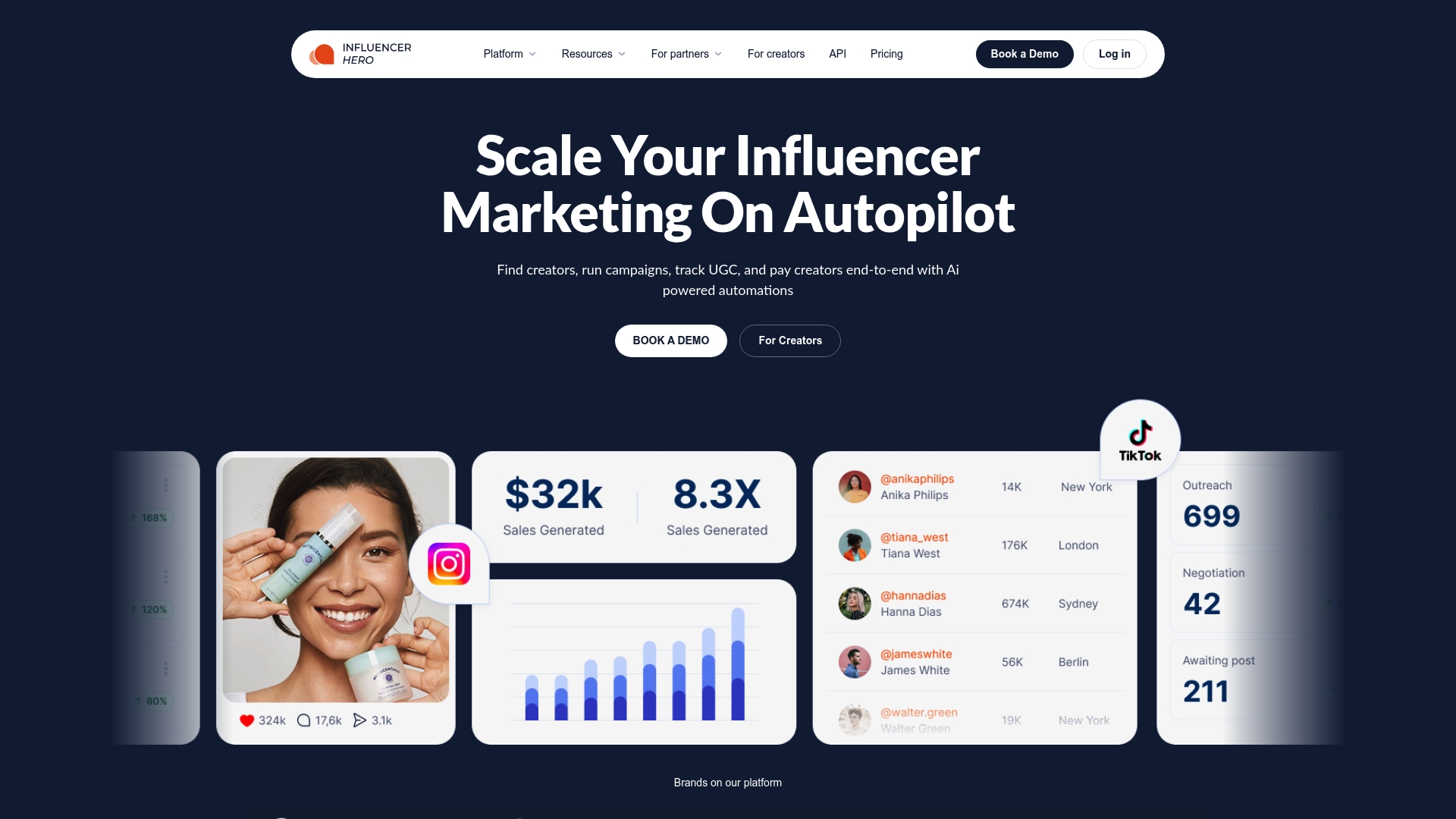
Automated outreach and drip campaigns operate across email, social platforms, and WhatsApp, a capability some teams will find unusually broad. Influencer Hero combines campaign management, content tracking, and AI discovery into one product. The platform also advertises e-commerce connectors and reporting dashboards for campaign measurement.
Core Features
Influencer Hero offers AI-powered creator discovery with multiple filter options and end-to-end campaign management that covers briefing, outreach, and payment automation. It tracks user generated content and stores it in a content library while dashboards provide campaign reporting and engagement metrics. Outreach automation supports multi-platform drip sequences, which reduces manual messaging work.
Key Differentiator
The product centers on AI-powered creator discovery and automation to reduce manual sourcing and outreach work. That focus aims to let marketing teams scale influencer programs by automating repetitive tasks and consolidating content collection. The vendor highlights this machine learning approach as the main workflow advantage.
Pros
Customer support is reported as highly responsive, which helps teams move campaigns through setup and troubleshooting faster. The platform's recruitment tools simplify outreach and onboarding, and automation covers outreach, payments, and content collection to cut repetitive work. E-commerce and email marketing connectors let brands send orders and campaign data to platforms such as Shopify and Klaviyo.
Cons
- Search and filter functionality has been reported as buggy and can prevent precise influencer targeting.
- Filters sometimes apply inconsistently, which slows down accurate list building for campaigns.
- Pricing starts at $279 per month, which may feel steep for smaller teams.
- Some specific search filters have limited effectiveness according to user feedback.
When It May Not Fit
If your team depends on pinpoint discovery for niche audiences, the inconsistent filter behavior will be a recurring problem. Small marketing teams with tight budgets may find the $279 starting price hard to justify. Agencies needing flawless, repeatable search accuracy for many clients will likely need stronger targeting tools.
Notable Integrations
Influencer Hero connects with major e-commerce and marketing platforms, including Shopify, Klaviyo, Mailchimp, Omnisend, BigCommerce, PrestaShop, Google Sheets, and Slack. These integrations support order syncing, audience messaging, and basic data exports into existing workflows.
Who It's For
Marketing teams at brands and agencies that want to scale influencer programs with automation and analytics will get the most value. E-commerce brands that rely on influencer content for product pages and email campaigns will benefit from the platform connectors. Teams that accept some search imprecision in exchange for automation will find it practical.
Real World Use Case
A skincare brand uses Influencer Hero to find beauty creators across regions, automate outreach sequences, collect UGC, and monitor engagement on dashboards. The team reduced manual messaging and centralised content approvals. Campaign reporting helped the brand compare creator performance across markets.
Pricing
Plans start at $279 per month for basic access, with higher tier plans and custom enterprise options available. The vendor lists enterprise features and custom pricing for larger programs.
Website: https://influencer-hero.com
Xrossworld
At a Glance
Automates the full influencer campaign lifecycle including discovery, negotiation, contract, and payouts within a single system. The system applies AI to evaluate creators on performance, brand fit, and safety signals. It targets enterprise and agency deployments that need structured execution and financial control.
Core Features
AI powered creator evaluation scores creator supply against performance, brand alignment, and safety signals to shorten candidate lists. Structured campaign planning records budgets, deliverables, and timelines. Automated negotiation and payout workflows close contracts and process payments within a regulated payment system.
Key Differentiator
The platform combines AI powered creator evaluation, automated negotiation and payout workflows, and enterprise grade governance in one infrastructure. That union reduces manual handoffs between sourcing, contracting, and finance teams. The result is a single system built for large, structured influencer programs.
Pros
Built for scale, Xrossworld brings operational discipline to campaigns that span multiple markets and to agency rollouts. It replaces ad hoc spreadsheets with automated workflows that handle discovery, negotiations, contracts, and payouts. Analytics and spending intelligence help you measure outcomes and tighten budget allocation across programs.
Cons
- Limited public detail on integrations. That gap can slow inbound data flows from ad platforms or CRMs.
- Feature depth assumes structured processes. Smaller teams running single creator tests may find the interface heavy.
- No clear pricing details are published. Sales negotiation appears likely for enterprise deployments.
When It May Not Fit
If your team runs single creator tests or very small influencer pilots, Xrossworld may be overly complex. Brands that require many prebuilt connectors should examine integrations closely because public details are sparse. Early stage teams running limited influencer pilots may prefer a lower touch tool.
Who It's For
Medium and large brands and advertising agencies managing influencer programs at scale will get the most from Xrossworld. Enterprise teams that need governance, budgeting controls, and measurable outcomes match this product profile. Procurement and legal teams will also find the governance controls useful.
Real World Use Case
A global brand used Xrossworld to coordinate campaigns across markets while enforcing contracts and payout rules. Automated creator scoring reduced manual selection work and allowed teams to reallocate effort to creative briefs and measurement. The platform centralizes reporting so regional leads pull consistent metrics for executive reviews.
Pricing
Pricing is not publicly listed. The offering targets enterprise and agency deployments, and contracts appear negotiated rather than self serve. Reach sales for a scoped proposal and an implementation estimate.
Website: https://xrossworld.ai
Comparison of alternatives
Understanding the nuances of available influencer marketing platforms is crucial for brands aiming to optimize their campaigns effectively. Each tool offers unique features and trade-offs that cater to specific business strategies and objectives.
Pricing structures and cost management
A significant distinguishing factor among these platforms lies in their pricing models. ContentGenZ's flat-fee subscription model eliminates commission-based costs, enabling predictable monthly expenses regardless of campaign volume. Upfluence, by contrast, offers custom pricing parallel to program size, which might best suit high-budget campaigns requiring specialized support and custom modules. Meanwhile, Influencity provides tiered subscription plans catering to teams of differing scales, which can help smaller organizations explore advanced capabilities gradually.
Analytical and data integration capabilities
While ContentGenZ excels in centralized campaign management through automation and streamlined processes, platforms like Influential and Upfluence distinguish themselves with advanced analytics integrations. For instance, Influential leverages psychographic analysis and sophisticated audience insights, while Upfluence's direct connections to e-commerce systems like Shopify enable ROI tracking by attributing creator-driven revenue. For teams managing multi-national campaigns, Xrossworld offers enterprise-grade campaign governance and financial control, which can benefit large agencies handling structured processes.
Best fit
-
For brands seeking predictable marketing budgets and simplified administrative workflows, ContentGenZ's flat-fee pricing model paired with unlimited campaign capacity is a standout solution.
-
For organizations prioritizing analytics for campaign optimization and influencer sourcing, Influencity provides advanced filtering and impactful data-driven analysis.
-
E-commerce teams needing direct integration of influencer efforts with sales platforms will benefit most from Upfluence's sales attribution capabilities.
-
Agencies managing large-scale campaigns requiring efficient financial governance and negotiation workflows might find Xrossworld an advantageous choice.
Our pick
While each platform excels in specific areas and addresses diverse requirements, ContentGenZ stands out due to its transparent pricing structure that eliminates commission fees—ensuring predictable and scalable cost management for influencer marketing campaigns. Brands focusing on scalable and financially transparent solutions will find this platform effectively suits their needs. However, for those with requirements like e-commerce sales attribution, advanced multi-market campaign governance, or in-depth psychographics, exploring other platforms included here might yield better results.
Contentgenz simplifies influencer collaborations with a structured workflow and flat-fee pricing model for predictable campaign costs.
| Platform | Key Differentiator | Core Feature Set | Pricing | Limitation |
|---|---|---|---|---|
| Contentgenz | Flat-fee pricing removes per-transaction costs | Sourcing, contracts, Stripe payouts | Starts at $99 SGD/month | Limited advanced integrations in beta phase |
| Influencity | AI-powered influencer discovery | Filters, analytics, social listening | Price not published | Data accuracy may require manual verification |
| Influential | AI and psychographics for precise matching | Large creator network, audience targeting | Price not published | High complexity suits large teams but burdens smaller setups |
| Upfluence | Direct ecommerce integration for revenue tracking | Shopify, outreach, UGC management | Price not published | Steep learning curve and restrictive contract options |
| Influencer Hero | Multi-platform outreach automation | Drip campaigns, dashboards, filters | Starts at $279/month | Discrepancies in filter precision affect targeting |
| Xrossworld | Enterprise-grade campaign governance | Automated creator evaluation | Price not published | Sparse integration detail complicates setup for broader stacks |
How to Solve Hidden Costs and Complex Campaign Management in Influencer Marketing
Many marketing teams and agencies face unpredictable commission costs and scattered workflows when managing influencer programs. This problem makes it hard to plan budgets and scale campaigns efficiently. Contentgenz solves this by letting brands handle multiple campaigns with a flat monthly fee while creators keep 100% of their earnings. Its centralized platform covers sourcing, briefs, approvals, and payments so you avoid juggling multiple tools or surprise fees.
Contentgenz fits small and medium brands, agencies, and marketers who want predictable monthly costs, simplified payment processes, and long-term creator collaborations. See how Contentgenz removes commission fees and streamlines influencer campaigns for better control and transparency.
Learn more about Contentgenz and start managing your influencer campaigns with clear costs and less workload.
FAQ
How does Contentgenz support predictable budgeting for influencer campaigns?
Contentgenz offers a flat monthly fee which removes commission surprises, making campaign costs predictable for monthly planning. This pricing model allows teams to manage campaigns efficiently without worrying about per-creator transaction fees. Brands can budget more effectively for their ongoing influencer work.
What is the difference between Influencity and Contentgenz?
Influencity combines AI-powered influencer discovery and analytics with end-to-end campaign management, providing a comprehensive suite for influencer marketing. In contrast, Contentgenz focuses on allowing brands to run multiple campaigns under a flat subscription without per-transaction fees, making it better suited for teams seeking predictable costs and ongoing collaborations.
Which platform automates payment tracking and contract management?
Contentgenz automates contract generation and payment tracking, simplifying the finance side of influencer marketing. The integration with Stripe for direct payments ensures creators receive timely payouts, which is crucial for managing multiple campaigns efficiently. This feature helps brands streamline their administrative processes.
Can I expect timely support when using Contentgenz?
While Contentgenz offers valuable features for campaign management and automation, the platform is currently in beta and may lack some advanced integrations. This could impact the level of support and onboarding assistance available, so users should prepare for a learning curve as features develop.
How does Contentgenz handle creator referrals?
Contentgenz includes a creator referral program that encourages longer-term partnerships with influencers. This feature helps brands build strong, ongoing relationships with creators, which can enhance the effectiveness of influencer campaigns over time.